
Guide · Window Tinting
How long does window tint take to cure? What to expect, day by day
When you can wind the windows down, why new tint can look hazy or bubbly for a while, and how weather and film type change the wait.
Written and reviewed by Mohammad Habboushi, Founder of Tinting Xperts
· 11 min read

Key takeaways
- Window tint usually takes a few days to a couple of weeks to cure, and can take a month or more in cool, cloudy weather.
- Keep the windows up for two days after fitting so the film can grip the glass without being dragged by the seals.
- Haze, a milky look and small water bubbles in the first days are normal and clear as the leftover water dries out.
- Warm, sunny weather speeds curing; winter, humidity, shade and thicker films slow it down.
- Leave the inside of the glass alone while it cures, then clean it with a soft cloth and an ammonia-free cleaner.
How long does window tint take to cure? Usually a few days to a couple of weeks, and sometimes a month or more in cold, cloudy weather.[1][2] Keep the windows up for two days after fitting. Haze and small water bubbles during curing are normal, and they clear as the film dries.[3]
This guide explains what curing is, what changes how long it takes, what's normal to see along the way and what isn't. It finishes with the aftercare steps that protect your tint while it settles. If you haven't booked yet, our car window tinting page explains how a job runs on the day.
How long does window tint take to cure?
There isn't one number, because the wait depends on the film and the weather. The International Window Film Association says curing typically ranges from a few days to a couple of weeks.[1] Film makers give wider ranges for the slowest cases.
3 to 90 days
How long Avery Dennison says its automotive film adhesive can take to reach full adhesion, depending on film type, thickness and conditions[3]
Avery Dennison's Asia Pacific warranty bulletin says dwell time can take from 3 to 90 days under normal conditions.[3] Madico, another film maker, says a dark film on a sunny window in a hot summer can cure within a few days. A heavy safety film on a shaded window in winter can take over a month.[2]
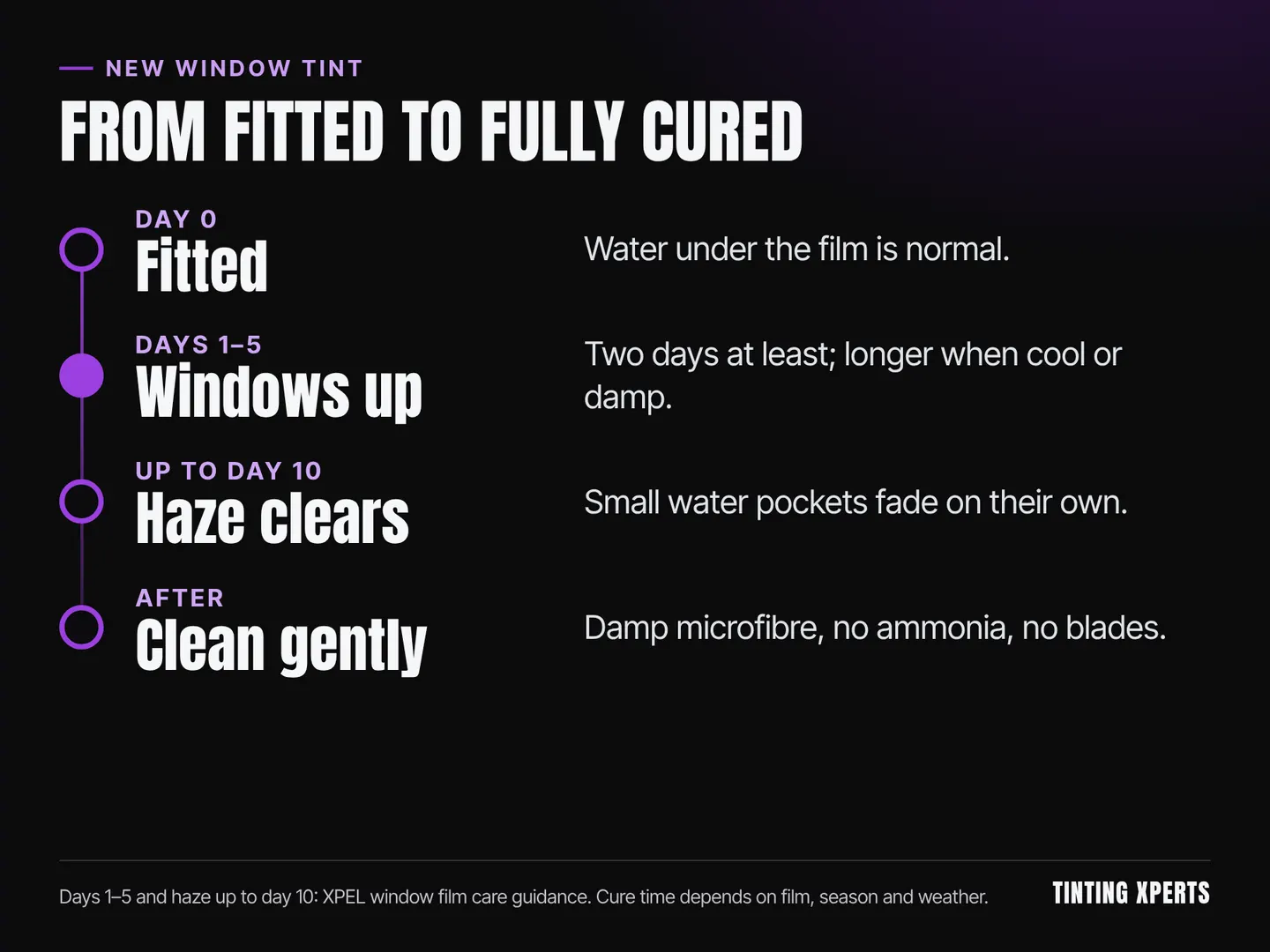
Most car tint on a Sydney car sits towards the quick end of those ranges. It's a thin solar film, not a thick safety film, and our weather is mild for much of the year. Here is the usual pattern:
| Stage | What's happening | What you should do |
|---|---|---|
| Day of fitting | Most of the water has been squeegeed out, but some stays under the film[4] | Drive home with the windows up; expect some haze |
| First two days | The adhesive starts to grip the glass | Keep every tinted window closed; don't touch or clean the inside |
| First week or two | Leftover water dries out; haze and small bubbles fade[3] | Park in the sun when you can; leave bubbles alone |
| A month or more (cold, cloudy weather or thick film) | Slow drying until the film reaches full adhesion[2] | Keep caring for it gently; call us if anything gets worse |
Those stages overlap, and every car is a little different. The film keeps working the whole time: Madico says it performs to its full solar control capability throughout curing.[2]
What curing actually means
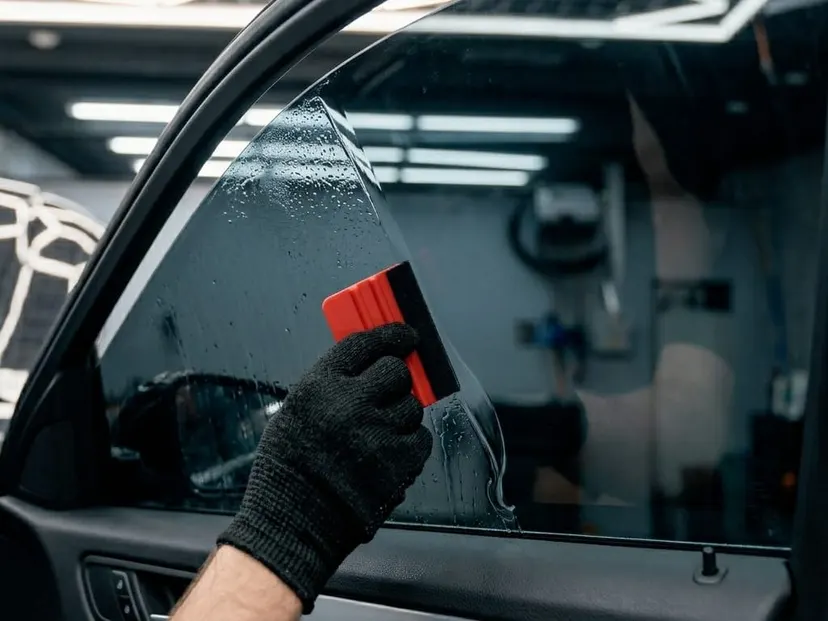
Car tint goes on wet. The fitter sprays the glass with a slip solution, lays the film in place and squeegees the water out. Madico explains that some residual water inevitably remains between the film and the glass.[4]
Curing is that last water drying out, so the adhesive can grip the glass fully. Madico says the so-called adhesive cure time on automotive film is really the drying time of the residual moisture.[4] Until then, the bond is weaker than it will be, which is why the first days matter most.
That's also why tint can look a little worse before it looks better. Avery Dennison notes that film which looks perfect at first may become hazy and milky, or develop bubbles, while the adhesive settles.[3] Once the film reaches full adhesion, those marks disappear.[3]
Does ceramic tint take longer to cure?
It can. Madico says the time to fully cure is related to the film's thickness and its coatings.[4] It adds that some automotive films with special high-performance coatings may have lengthened cure times.[4] Ceramic films carry those kinds of coatings, so a few extra days of haze on ceramic tint isn't a sign of a problem.
If you're still choosing a film, our guide to ceramic vs carbon tint compares how each one performs once it's cured.
What changes the cure time
Five things make the biggest difference. Avery Dennison names weather, humidity and the amount of sunlight on the glass, and Madico adds the film itself and where the car is stored.[3][4]
Temperature and season. Avery Dennison says curing tends to be faster in summer and slower in winter.[3] A tint job in January usually clears sooner than one in July.
Sun on the glass. Warmth from the sun drives the water out. Madico's fastest example is film on a sunny window in a hot summer.[2]
Humidity. Avery Dennison lists humidity among the conditions that affect adhesion.[3] Damp, overcast weeks slow the drying.
The film. Thicker films and films with special coatings take longer.[4] A thin solar film dries faster than a thick security film.
Where you park. Madico says typical cure times can be extended or shortened by climate and vehicle storage.[4] A car in a dark garage dries slower than one on a sunny driveway.
Tinting in winter
You can tint any time of year. In a Sydney winter, expect haze to hang around longer, especially on glass that sees little sun, such as a rear windscreen on a car that lives in a garage. That's the slow end of the cure range, not a fault.[3] Give it time before you judge the finish.
Tinting in summer
Hot, sunny weeks are the quickest. Haze often clears in days rather than weeks.[2] The two-day rule for the windows still applies, because the adhesive needs time to grip whatever the weather.
What's normal while tint cures
Haze and a milky look
A cloudy or milky patch, often worse in the corners and lower edges, is the most common thing people worry about. Solar Gard says this haze comes from a small amount of moisture left under the film, and that it is normal.[5] It usually disappears in a few days, depending on the weather.[5]
Small water bubbles and an orange-peel texture
Small pockets of water, or a slightly dimpled look like orange peel, are also part of curing. Avery Dennison says it is quite normal for new film to develop bubbles or an orange-peel effect before it reaches full adhesion.[3] Madico says water haze and water distortion seen during drying are not to be regarded as defects.[4]
Leave them alone. Pressing or squeezing a soft, uncured film can crease it or shift it. The water dries out on its own.
Tiny specks under the film
Look very closely at almost any tinted window and you may find a speck or two. Avery Dennison says a few small particles or points may remain, usually visible only from outside, and that they don't affect the film's performance or life.[3] 3M notes that small dust inclusions are unavoidable when a fitting area isn't dust-free.[6] We fit in a dust-controlled bay to keep them to a minimum.
A thin gap at the top edge
On wind-down windows, the film usually stops just short of the top edge so the seal doesn't catch it. Madico's inspection guide allows a top-edge gap of about 1–2 mm.[4] It's deliberate, not a short cut.
What isn't normal: when to call us
Most cure marks fade steadily. These are the signs that something needs a look:
Edges lifting or peeling, especially along the top of a wind-down window.
A crease or fold in the film that doesn't flatten out.
Bubbles that grow, or that stay the same size well after the haze has cleared.
Film that has moved, often because a window went down too early.
Haze that isn't fading at all after a few warm, sunny weeks.
The film's maker warrants against these kinds of faults. Avery Dennison's warranty, for example, covers professionally fitted film that bubbles, peels, cracks, delaminates or fades to purple.[3] Every tint job we fit comes with a lifetime tint warranty, so if something looks wrong, tell us.
Judge the finish the way installers do. Madico's guide says to view the glass at right angles in natural daylight, from about a metre away.[4] Avery Dennison adds that you should look through the film, not at it, and that some apparent defects are in the glass rather than the film.[3]
Window tint aftercare: the first weeks
Curing looks after itself if you avoid a few things. These steps cover the first days and weeks after fitting.
Keep the windows up for two days
This is our rule for every job. A window going down drags the film against the door seal before the adhesive has gripped, which can lift an edge or shift the film. 3M says not to open or close windows for at least 48 hours after installation.[6]
Lock the windows and tell everyone
Switch on the window lock if your car has one. Tell anyone else who drives the car, and remind kids in the back. Most early damage comes from a window button pressed out of habit.
Leave the inside of the glass alone
Don't wipe, clean or press on the film while it cures. 3M says to wait at least 48 hours before cleaning, and Avery Dennison recommends not cleaning its film for at least 4 weeks.[6][3] The longer wait is the safer one.
Don't stick anything to the film
Hold off on suction-cup phone mounts, sunshades with suckers and adhesive stickers. Avery Dennison says not to attach anything to its film with adhesive or suction cups.[3]
Let the haze clear on its own
Park in the sun when you can and give it time. Don't push bubbles out or pierce them; they shrink as the water dries.
Clean gently once it's cured
Use a soft microfibre cloth with clean water or a mild detergent. 3M recommends pH-neutral glass cleaners without abrasives.[6] Avoid ammonia cleaners, brushes and anything abrasive.[3]
One instruction from Avery Dennison's care bulletin sums up the whole first stage:
Above all, do not roll windows up and down until ultimate adhesion has been achieved.
In practice, the first two days are the critical window for a thin car film. After that, use the windows normally, but treat them gently while haze is still visible.
Cleaning tinted windows for the long run
Tint lasts for years with the right cleaning habits. Solar Gard advises against ammonia-based or other strong cleaners, and warns that paper towels may put fine scratches in the film.[5] Use a soft cloth or chamois instead.[5]
3M adds a point people often miss: only use clean water, because sand and dust in dirty water can scratch the tint.[6] Rinse your cloth often, and never use a blade or scraper on the inside of the glass. On the rear windscreen, wipe along the demister lines, not across them.
Washing your car after tinting
Car tint is fitted to the inside of the glass, so washing the outside of the car doesn't touch the film. Keep the windows fully closed while you wash, and don't let anyone wipe the inside of the glass until the film has cured. If you use an automatic car wash in the first two days, make sure every window is locked up.
The rear demister is a common question. The care sheets we checked from 3M, Avery Dennison and Solar Gard don't set a separate rule for demisters.[6][3][5] Our advice is simple: don't scrape or scrub the rear glass while it cures, and ask us if you're unsure about your car.
How long the tint job itself takes
Curing happens after you drive away. The fitting is much quicker: most cars take two to four hours. Here's how the day runs at our workshops:
Tell us the car. The make, model and year let us plan the film and the time.
Pick your shade. We show you film on your own glass and explain the legal limit for each window. Our guide to window tint percentages helps you choose.
We fit it. The film is plotter-cut to your car and fitted in-house in a dust-controlled bay. We check the shade against NSW limits before fitting.
Cure and go. You drive away the same day, with the windows up for two days.
Choosing a darker shade doesn't change the cure time much, but it does change what's legal. Our guide to NSW window tint laws covers the limit for each window. Avery Dennison also recommends telling your insurer that window film has been fitted.[3]
Our service
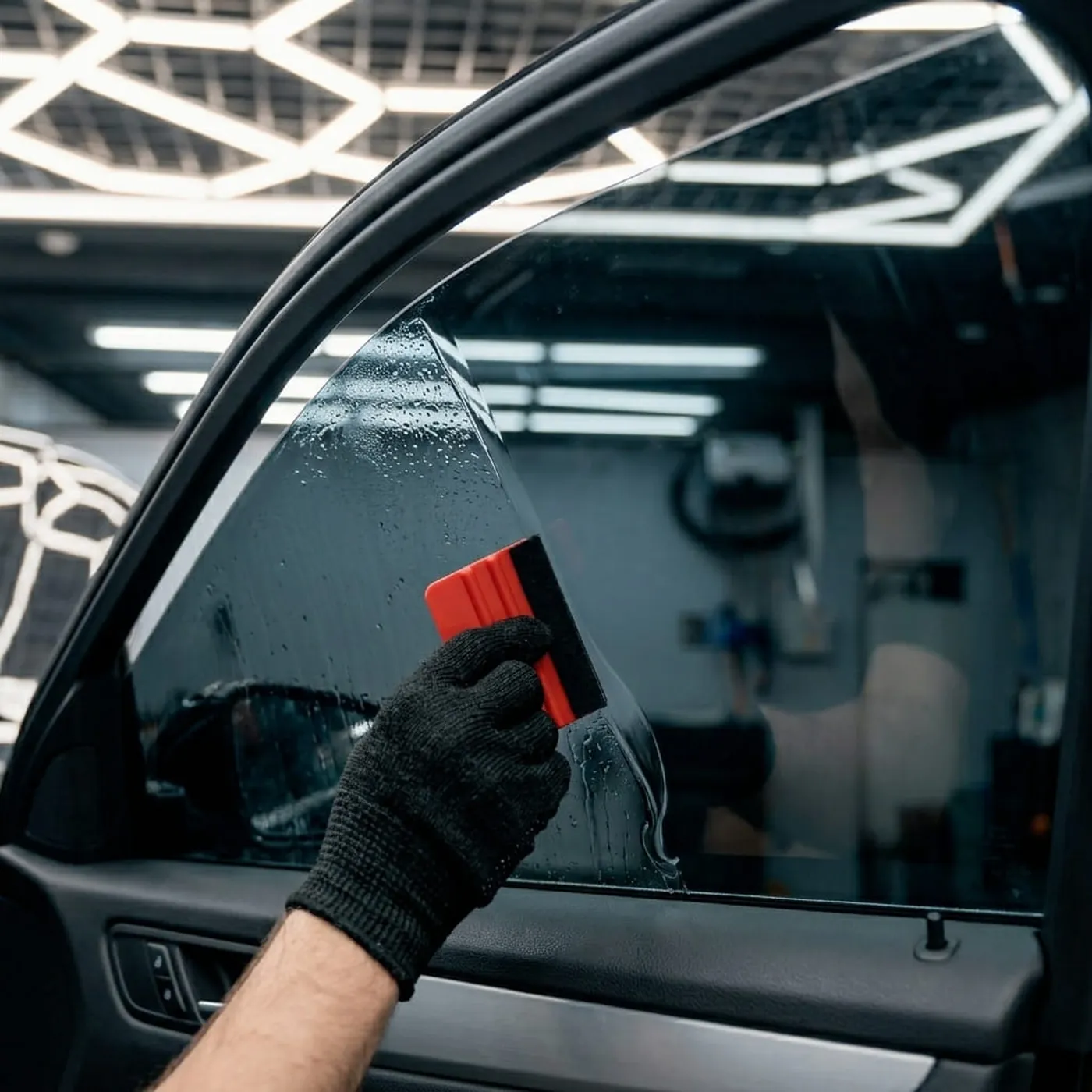
We tint cars at two workshops in south-west Sydney. You choose from three ceramic film grades, we check every shade against the NSW limits on your glass, and most cars are done in two to four hours with a lifetime warranty on the tint.
Window tint curing questions
How long after tinting can I roll my windows down?
Our rule is two days with the windows fully up. 3M gives the same guidance for its film, saying not to open or close windows for at least 48 hours.[6] In cold, damp weather, waiting a little longer does no harm.
Is it normal for new tint to look hazy?
Yes. Haze comes from a small amount of moisture left under the film, and Solar Gard says it is normal.[5] It usually clears in a few days to a couple of weeks, depending on the weather.
Will the bubbles in my new tint go away?
Small water bubbles will. Avery Dennison says bubbles and an orange-peel look are normal during curing and disappear once the film reaches full adhesion.[3] Bubbles that grow, or stay unchanged after the haze has gone, need a look.
When can I clean the inside of my tinted windows?
Wait until the film has cured. 3M says at least 48 hours, while Avery Dennison recommends waiting at least 4 weeks for its film.[6][3] Then use a soft cloth and an ammonia-free, non-abrasive cleaner.
Does cold weather slow down window tint curing?
Yes. Avery Dennison says curing tends to be faster in summer and slower in winter, and humidity and sunlight both play a part.[3] In winter, haze can take noticeably longer to clear.
Can I wash my car after getting it tinted?
Yes, the outside. The film is on the inside of the glass, so a normal wash doesn't touch it. Keep the windows closed and leave the inside of the glass alone until the film has cured.
Does ceramic tint take longer to cure?
It can take a little longer. Madico says films with special high-performance coatings may have lengthened cure times.[4] A few extra days of haze on ceramic film is normal.
Have a question about tint you've just had fitted? Call or visit our Revesby workshop or our Condell Park workshop, and we'll take a look.
Sources
- [1]International Window Film Association. After You Buy, 2026. ↑
- [2]Madico. How Long Does Window Film Take to Fully Cure on a Home or Building, 2018-10. ↑
- [3]Avery Dennison. Avery Dennison Automotive Window Film Warranty Bulletin 1.1 (Asia Pacific), 2022-07. ↑
- [4]Madico. Visual Quality Inspection Guidelines for Automotive Window Film, 2020-06. ↑
- [5]Solar Gard Australia. Care and Maintenance of Window Film, 2026. ↑
- [6]3M. Automotive Window Film Product Care Guide, 2024. ↑
About the author
Founder, Tinting Xperts
Mohammad Habboushi founded Tinting Xperts in 2016 with one bay, one squeegee and a rule the team still works to: if it isn't right, it doesn't leave. The business has grown to two workshops, at Revesby and Condell Park, and a team of more than 30 fitters, and Mohammad still fits cars on the floor most days.


