Guide · Window Tinting
Window tint percentages: what 5%, 20%, 35%, 50% and 70% really look like
What each tint shade looks like by day and at night, which combinations are legal in NSW, and why darkness and heat rejection are two different things.
Written and reviewed by Mohammad Habboushi, Founder of Tinting Xperts
· 10 min read

Key takeaways
- A tint percentage is the share of light that gets through, so a lower number is a darker window.
- In NSW the darkest legal pairing on a passenger car is 35% on the front side windows and 20% behind the driver.
- Shades of 5% and 15% aren't legal on any window of a NSW passenger car, though vans and utes have more freedom at the rear.
- Darkness doesn't decide heat rejection: a light ceramic film can reject more heat than a very dark dyed one.
- Choose each window on its own: law and night vision for the front, privacy for the rear.
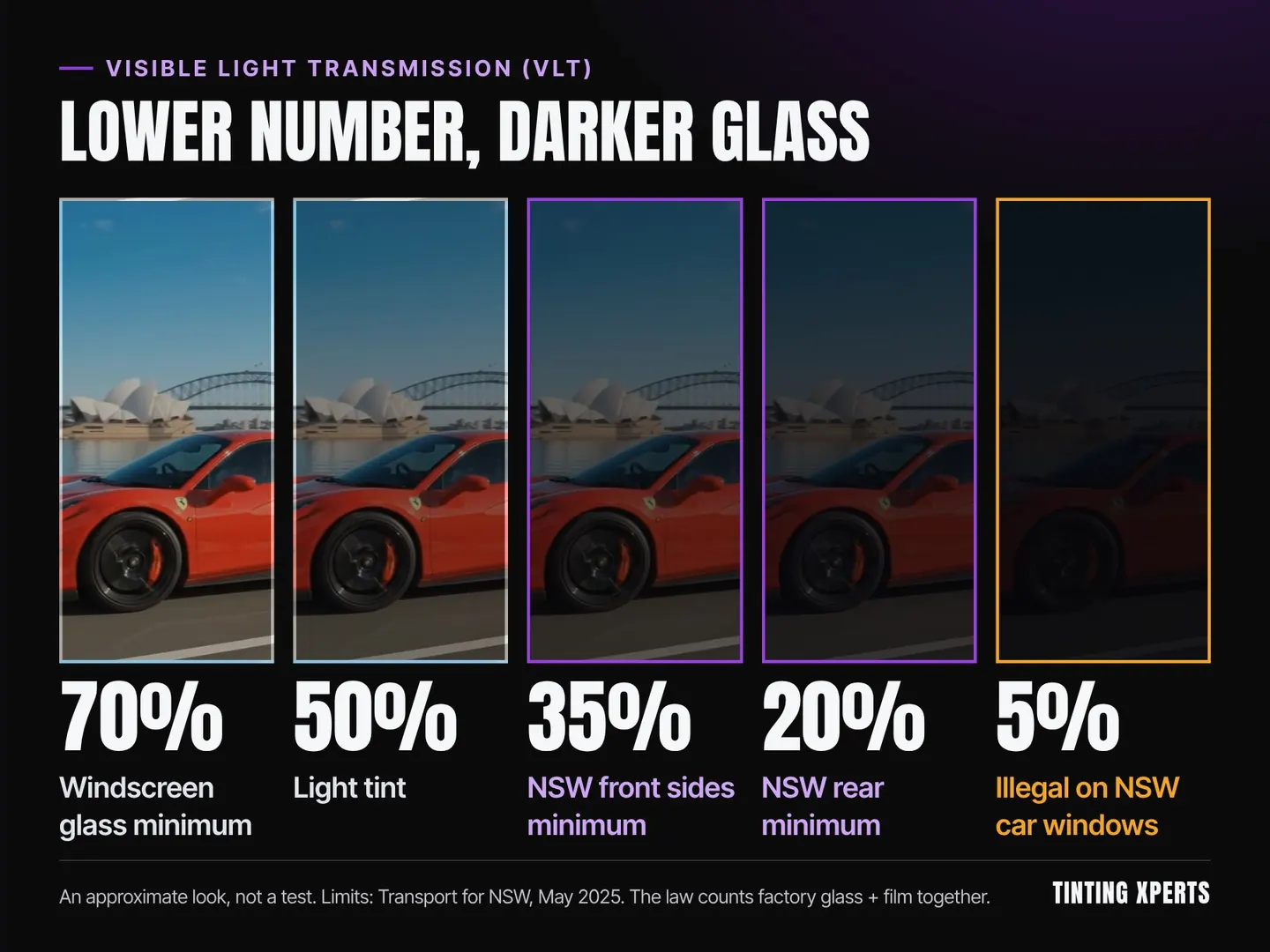
Window tint percentages tell you how much visible light gets through the window. A 70% tint lets most light in and looks almost clear, while a 5% tint lets very little in and looks black.[1] The lower the number, the darker the glass. In NSW, the darkest legal shades are 35% on the front and 20% at the rear.[1]
The number is called VLT, short for visible light transmittance. It is the single most important figure when you choose a tint, because it decides how the car looks, how private it is, how well you see at night, and whether it passes a pink slip. It does not decide how much heat the film stops. That comes down to what the film is made of.
How window tint percentages work
Think of the percentage as the light that survives the trip through the glass. At 35%, about a third of the light gets through and the rest is blocked. A window at 0% lets no light through at all.[1] So when people ask whether 20% or 35% is darker, the answer is 20%.[1]
Two things catch people out. First, the law measures the finished window: Western Australia's transport department says a 35% reading means 35% of the light passes through both the window and the tint together.[2] NSW counts it the same way, and most car glass already has a slight tint of its own.[3]
Second, the number on the box is a shade name, not always a measured reading. 3M's CR BLK 30 film measures 35% on its test glass, and its CR BLK 15 measures 17%.[4] XPEL's XR PLUS 15 measures 12% and its XR PLUS 35 measures 38%.[5] What matters is the reading through your own window once the film is on.
What each tint percentage looks like by day and at night
Here is how the common shades look and feel. Day and night descriptions are general: the colour of your car, the interior trim and the factory glass all change the effect. The legal column is for a NSW passenger car with an exterior mirror on each side.
| Shade | From outside by day | From inside at night | Legal on a NSW passenger car? |
|---|---|---|---|
| 5% (often called limo tint) | Black; you can't see in | Very hard to see out, especially when reversing | No window[1] |
| 15% | Very dark; shapes only up close | Hard to see out in poorly lit streets | No window |
| 20% | Dark; strong privacy | Workable for rear glass; harder through the rear windscreen | Rear side and rear windows only |
| 35% | Clearly tinted; people inside are visible up close | Clear on lit roads; darker on unlit ones | Every window except the windscreen |
| 50% | Light tint; obvious only next to clear glass | Close to untinted | Every window except the windscreen |
| 70% | Looks almost clear | Close to untinted | Every window; on the windscreen only as a top band |
The legal answers come from the Transport for NSW tint fact sheet.[1] It sets 35% for the front side windows, 20% for the windows behind the driver, and 70% for the windscreen, where film is only allowed as a band across the top.[1]
5% and 15%: the darkest shades
These are the shades people mean by limo tint. From outside, the glass looks black. Inside, they cut glare hard, but at night you will struggle to see through them, and they make reversing difficult. On a NSW passenger car they aren't legal on any window, because the darkest rear limit is 20%.[1]
There is one exception worth knowing. Transport for NSW sets no minimum for windows behind the driver on commercial vehicles, trucks and heavy buses.[1] So a van's rear glass can take a shade this dark.
20%: dark rear privacy
Twenty per cent is the darkest legal rear shade in NSW, as long as the car has a mirror on each side.[1] By day, people outside see little more than shapes. It keeps sun off children and pets in the back, and it hides what's on the back seat. At night it noticeably darkens the view through the rear windscreen, so reversing cameras and mirrors do more of the work.
35%: the front-window shade
Thirty-five per cent is the darkest legal shade for the front side windows in NSW.[1] It is clearly tinted from outside and gives real glare relief, but you can still see the driver up close. On lit roads at night, it stays easy to see through. Paired with 20% behind, it gives the darkest legal look.[1]
50% and 70%: light and near-clear
These shades are for drivers who want heat and UV protection without a dark look. A 70% film is hard to spot on the car. XPEL's XR PLUS 70, for example, measures 67% VLT and cuts glare by only 27%.[5] With a ceramic film, light shades can still reject a lot of heat, which the next section explains. They are also the best choice if you find night driving hard.
Darkness and heat rejection are different things
A darker film blocks more visible light, so it cuts more glare. But most of the heat you feel comes from infrared light, which you can't see. 3M describes infrared rays as primarily responsible for the heat you feel when driving.[4] How much infrared a film blocks depends on what it's made of, not how dark it is.
XPEL's published figures show this clearly. Three of its films sit at almost the same darkness, between 34% and 38% VLT.[5] Yet their total solar energy rejection runs from 36% to 59%, and their infrared energy rejection from 11% to 70%.[5] The two nano-ceramic films lead, and the dyed film trails.[6]
| Film | Type | Measured VLT | Total solar energy rejected | Infrared energy rejected |
|---|---|---|---|---|
| XPEL PRIME XR PLUS 35 | Multilayer nano-ceramic[6] | 38% | 59% | 70%[5] |
| XPEL PRIME XR Black 35 | Multilayer nano-ceramic | 36% | 59% | 58% |
| XPEL PRIME CS Black 35 | Colour-stable dyed | 34% | 36% | 11% |
So two cars with the same 35% tint can feel very different on a hot day.[5] The darkness is the same, the heat isn't. This is why we fit ceramic film: you pick the shade for looks and the law, and the film does the heat work.
52%
Total solar energy rejected by XPEL's near-clear XR PLUS 70 ceramic film (67% VLT), more than its darkest dyed shade[5]
The darkest colour-stable dyed film on the same sheet, CS Black 5, lets through just 5% of light but rejects only 45% of total solar energy.[5] In other words, a nearly clear ceramic film can out-perform a black dyed one on heat. Solar Gard makes the same point, saying visibly clear window film can be just as effective as a dark one.[7]
Ultraviolet is different again. Every shade on XPEL's sheet rejects 99% of UV, from the darkest to the lightest.[5] 3M lists its CR BLK range at 99.8% to 99.9% UV rejection across all shades.[4] You don't need a dark tint to protect your skin or your interior from UV.
For a closer look at film types, read our guide to ceramic vs carbon tint, or see our nano-ceramic window tinting page.
Legal tint percentage combinations in NSW
In NSW, the front side windows and the windows behind the driver are treated separately.[1] Any front shade of 35% or lighter can pair with any rear shade of 20% or lighter, as long as the car has an exterior mirror on each side.[1] Some common legal pairings:
35% front, 20% rear: the darkest legal look, with strong rear privacy.[1]
35% all round: an even look from every angle, and the rule if your car has only a driver-side mirror.[1]
50% front, 20% rear: lighter front glass for night driving, with rear privacy kept.[1]
70% front, 35% rear: a near-factory look, with ceramic film doing the heat work.[1]
Factory privacy glass changes the maths. Transport for NSW says the combined VLT of the privacy glass plus any film must stay within the limits, and no film can go on privacy glass that is already darker than the limit.[1] Our guide to NSW window tint laws covers every window and the exceptions in detail.
Choosing window tint percentages for each window
You don't need one shade for the whole car. Each window does a different job, so choose it on its own.
Front side windows: start from the law. In NSW the darkest you can go is 35%.[1] Go lighter if you drive a lot at night or find dark glass tiring.
Rear side windows: choose for privacy and passengers. Down to 20% is legal on a car with a mirror on each side.[1]
Rear windscreen: think about reversing at night. A very dark rear screen makes the rear-view mirror less useful after dark.
Windscreen: only a band across the top is allowed, within 10% of the windscreen's height or above the wiper sweep, whichever is greater.[1]
Tell us the car and how you use it
Make, model and year tell us what glass you have and whether the rear is factory privacy glass. Tell us how much night driving you do, and whether you carry children or gear in the back.
See the shades on your own glass
Swatches on a counter look different from film on your car. We show film on your own glass, so you see the real shade against your paint and trim.
Check the shade against NSW limits
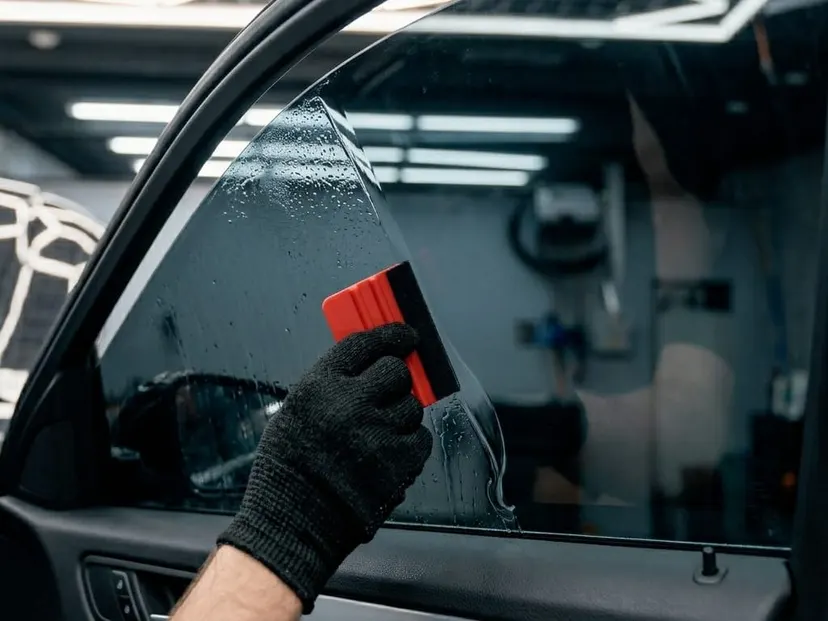
The reading through glass and film together has to meet the limit for each window.[1] We check the shade against NSW limits before fitting, and tell you if your factory glass rules a shade out.
Pick the film for heat, then fit
With the shades set, choose the film type for heat rejection. The film is plotter-cut to your car and fitted in-house in a dust-controlled bay, usually in two to four hours.
Night driving and dark tint
Darker glass means less light reaching your eyes, and that matters most when there's little light to start with. VicRoads says any reduction in driver vision, particularly in twilight or wet weather, will lead to a reduction in safety.[3] It adds that this is likely to be more critical for older drivers and people with even minor vision loss.[3]
In practice, the front side windows matter most at night, because you look through them to check mirrors and side streets. That is one reason NSW keeps the front limit at 35%.[1] If you already find night driving hard, choose a lighter front shade and let a ceramic film handle the heat. Keep the rear windscreen in mind too: a dark rear screen makes reversing at night harder, even with a camera.
Getting the shade right with Tinting Xperts
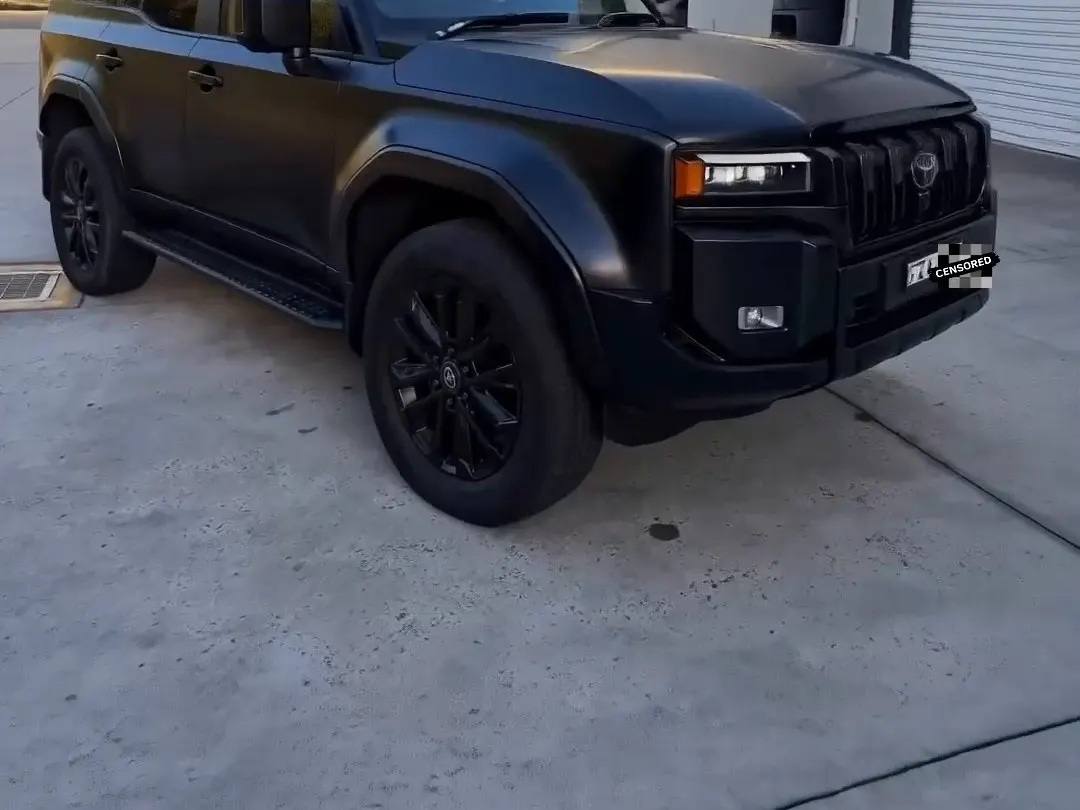
Our car window tinting starts with the shade conversation, not the sale. We show you film on your own glass, explain the legal limits, and check the shade before fitting. If heat is the main worry, ceramic window tinting lets you keep a lighter, legal shade without a hot cabin. Every job comes with a lifetime tint warranty.
After fitting, leave the windows up for two days while the film cures. Our guide to how long window tint takes to cure explains what's normal in the first weeks. You can visit our Revesby workshop or our Condell Park workshop.
Our service
Our ceramic window film (IR70) stops around 70% of the infrared heat that comes through your glass, blocks almost all UV and has no metal to upset your phone or GPS. We fit it to NSW-legal shades at Revesby and Condell Park, usually in a single visit.
Window tint percentage questions
Is 20% or 35% tint darker?
A 20% tint is darker. The percentage is the light that gets through, so a lower number means less light and a darker window.[1] A 20% film lets through roughly a fifth of the light, and a 35% film about a third.[1]
What tint percentage is limo tint?
Limo tint usually means a 5% shade, the darkest in most film ranges, including XPEL's.[5] It looks black from outside. It isn't legal on any window of a NSW passenger car, because the darkest rear limit is 20%.[1]
What is the best tint percentage for heat?
Heat rejection depends more on the film type than the shade. In XPEL's figures, a near-clear ceramic film rejects more total solar energy than its darkest dyed film.[5] Choose the shade for looks and the law, then a ceramic film for heat.
Can you see out of 20% tint at night?
Yes on lit streets, but it is noticeably darker, especially through the rear windscreen when reversing. That is why NSW only allows 20% behind the driver, and only with a mirror on each side.[1] On the front windows, the limit is 35%.[1]
Does a darker tint block more UV?
Not in any way that matters. XPEL lists 99% UV rejection for every shade in its range, from the darkest to the lightest.[5] A light film protects your skin and interior as well as a dark one.
Why does my 35% tint read darker than 35%?
Want to see the shades on your car? Send us the make and model and we'll tell you the legal options for each window.
Sources
- [1]Transport for NSW. How do I know my windows and window tint are legal in NSW?, 2025-05. ↑
- [2]Department of Transport and Major Infrastructure, Western Australia. IB-119D Vehicle Safety and Standards Bulletin: Window Tinting, 2025-10. ↑
- [3]VicRoads. Vehicle Standards Information 2: Window tinting and films, 2021-10. ↑
- [4]3M. 3M Automotive Window Film Crystalline Series CR BLK, 2025. ↑
- [5]XPEL. XPEL PRIME USA Specification Sheet, 2023-05. ↑
- [6]XPEL. XPEL PRIME Window Tint, 2026. ↑
- [7]Solar Gard. Myth Buster: Does Window Film Need To Be Dark To Work?, 2026. ↑
About the author
Founder, Tinting Xperts
Mohammad Habboushi founded Tinting Xperts in 2016 with one bay, one squeegee and a rule the team still works to: if it isn't right, it doesn't leave. The business has grown to two workshops, at Revesby and Condell Park, and a team of more than 30 fitters, and Mohammad still fits cars on the floor most days.


