
Wraps & Signage
Vehicle Signage in Sydney for Vans, Utes and Fleets
Vehicle signage puts your business name, number and brand on your vans, utes and cars. We design it, send a proof, then print or cut it and fit it indoors at Revesby and Condell Park, from simple lettering on one ute to matching graphics across a whole fleet.

What it is
What automotive signage gets you
Vehicle signage in Sydney turns your work van, ute or car into an advert that's seen wherever you drive and park. It can be simple cut vinyl lettering with your name and number, printed graphics with your logo and photos, or a part or full wrap in your brand colours.
We design, print, cut and fit signage at our Revesby and Condell Park workshops in south-west Sydney. You send your logo and details, we lay them out on your vehicle and send a proof, and nothing is printed until you approve it. The vinyl goes on indoors, so dust and wind don't end up under the graphics.
Whether it's your first ute or a yard full of vans, this page walks through the kinds of signage, which suits which vehicle, how to design graphics that read in traffic, how the job runs, and what changes the cost.
- Layout designed on your vehicle, with a proof to approve before anything is printed
- Cut vinyl lettering or printed and laminated graphics, to suit the design
- Vehicle cleaned and prepared so the vinyl bonds properly
- Fitted indoors in clean bays, with edges sealed
- One design adapted to each model across a fleet
Vehicle signage options: lettering, graphics and wraps
There are four main ways to sign a work vehicle. They differ in how much of the vehicle they cover, how much colour and imagery they can carry, and how much fitting time they take. Many businesses start with lettering and move up as they grow.
Cut vinyl lettering and logos
Letters and simple logo shapes are cut from solid-colour vinyl by a plotter, then transferred onto the vehicle. There's no background, so the vehicle's paint shows between the letters. It's crisp, durable and the most economical way to put your name, trade, phone number and website on a vehicle.
Printed graphics and decals
Full-colour designs are printed on vinyl, laminated for protection against sun and scuffs, then cut to shape. Printing handles gradients, photographs and logos with many colours, which cut vinyl can't. Rear doors, side panels and tailgates are the usual places.
Part wraps
A printed or coloured wrap covers part of the vehicle, often the rear half or the lower sides, and blends into the paint. You get the impact of a wrap on the panels people see most, with less material and fitting time.
Full printed wraps
The whole vehicle is covered in your design, which turns it into a moving billboard and shields the paint underneath. Full wraps are fitted the same way as our car wrapping colour changes, panel by panel with heat and careful trimming.
| Criterion | Cut vinyl lettering | Printed decals | Part wrap | Full wrap |
|---|---|---|---|---|
| Coverage | Text and simple logos only | Selected panels | Part of the vehicle | The whole vehicle |
| Colours and images | Solid colours | Full colour, photos and gradients | Full colour or a solid wrap colour | Full colour across every panel |
| Visual impact | Clear and tidy | Strong on the panels covered | High | Highest |
| Paint protected | Very little | Under the graphics | Under the wrapped panels | Every wrapped panel |
| Best for | A first vehicle, trailers, simple branding | Logos and promotions on doors and tailgates | Fleets wanting impact at lower cost | Maximum visibility and a standout look |
Signage for vans, utes, cars and trucks
Each kind of vehicle has its own canvas, and good signage works with its shape rather than against it.
Vans
A van has big, flat sides and rear doors, the best signage space on the road. The rear doors are read by the driver behind you in traffic, so they carry the phone number and website. The sides suit a logo, a short list of services and, if you like, a photo of your work.
Utes
Ute doors, the tailgate and the rear quarter panels carry most of the message. Canopies and toolboxes add flat panels that suit large lettering. Keep graphics clear of the tub's edges and any racks, which get knocked about on site.
Cars and SUVs
Sales reps, real estate agents, cleaners and mobile services often sign a car. The front doors and rear window are the obvious spots. Subtle lettering keeps the car usable for personal driving while still marking it as yours.
Trucks and trailers
Box bodies and trailer sides are big, flat and easy to read from a distance. Large cut lettering or printed panels work well, and the same design can match your vans and utes.
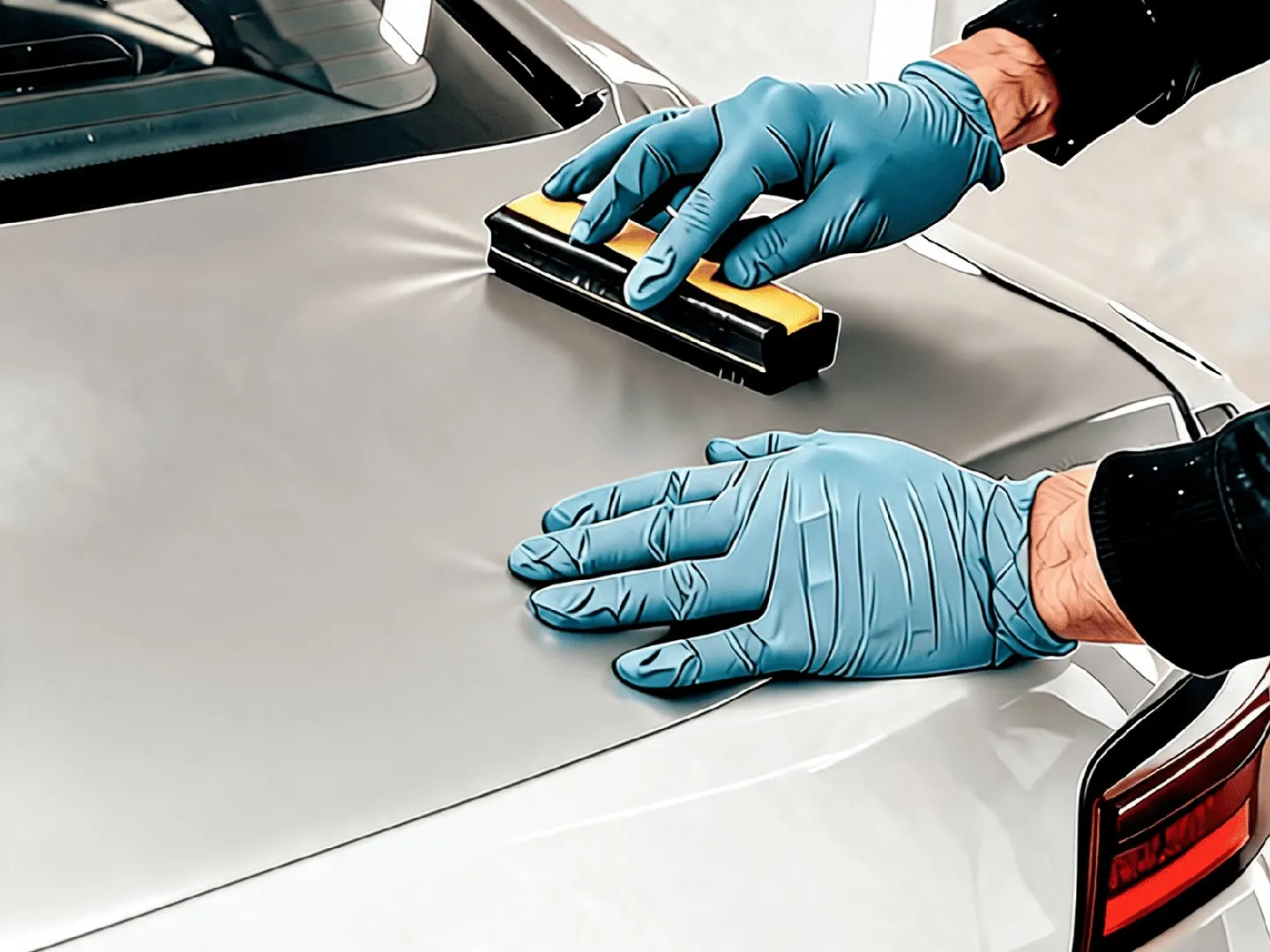
Fleet signage: one design across every vehicle
A fleet that looks the same everywhere it parks builds recognition fast. The challenge is that fleets are rarely identical. Vans change model, utes come with different trays, and a new vehicle arrives with a different body shape.
We start with one master design, then adapt it to each model so the logo, colours and contact details sit in the same relative places. When you add a vehicle later, we work from the same files, so it matches the rest of the yard. Rolling out a rebrand across a fleet can be planned vehicle by vehicle, so your business is never off the road all at once.
Designing vehicle signage people can read in traffic
People see your vehicle for a few seconds, usually while they're moving too. The design has to work at a glance, from a distance, and at an angle. These rules make the biggest difference.
Say three things: who you are, what you do and how to reach you. Everything else is optional.
Make the phone number big and put it on the rear, where the car behind can read it at the lights.
Use strong contrast, such as dark lettering on a white van or white on a dark one.
Pick a plain, heavy typeface. Thin script fonts disappear at a distance.
Keep text off door handles, vents, deep body lines and rubbers, where it distorts or wears.
Match your other branding so people recognise you on the road, on your website and at your premises.
Leave space. A clean layout reads faster than a crowded one.
Design is included with our signage. We place your logo and details on a drawing of your vehicle, suggest a layout that reads well around its windows and body lines, and send a proof. You approve it, or ask for changes, before anything is printed or cut.
How a signage job runs, from brief to fitted
Most signage jobs follow the same path, whether it's one ute or a fleet.
Send your brief
Tell us the vehicle, what the signage needs to say, and send your logo, ideally as a vector file. If you only have a low-resolution logo, tell us, as it may need to be redrawn for print.
Design and proof
We lay the design out on your vehicle and send a proof. Changes happen here, on screen, where they cost nothing in material.
Print, laminate and cut
Printed graphics are printed and laminated to resist sun and scuffs. Lettering and solid shapes are plotter-cut from coloured vinyl.
Prepare the vehicle
The panels are washed, decontaminated and wiped down so the adhesive grips evenly. Bring the vehicle in clean if you can, especially if it's been on a dusty site.
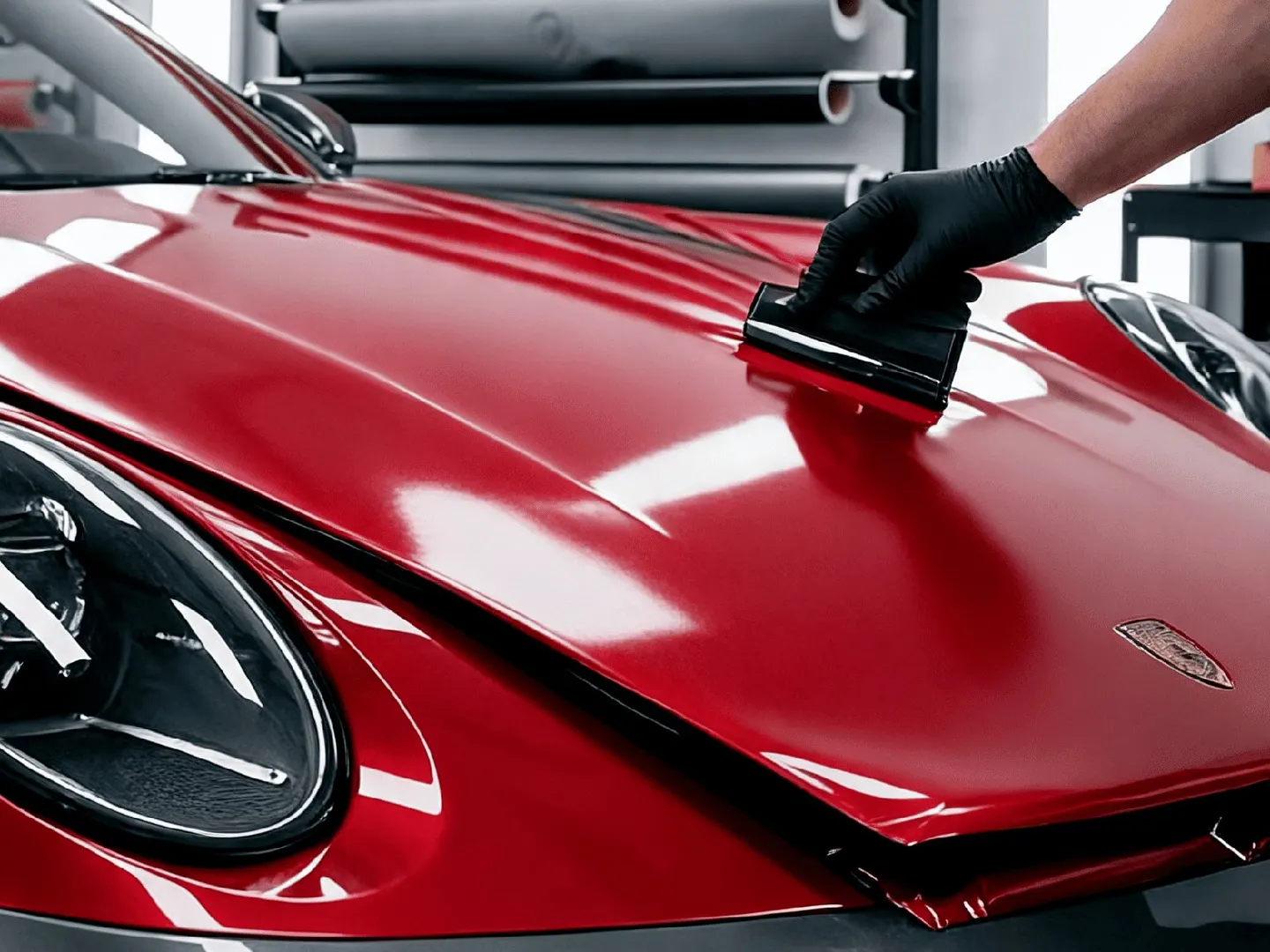
Fit and seal
Graphics are positioned against the approved proof, squeegeed down and trimmed around shut lines, handles and rubbers. Edges are sealed and the vehicle is checked before you collect it.
Lettering on a single vehicle is often fitted the same day. Larger printed graphics and wraps take longer. We give you the timing with the quote, and for fleets we schedule vehicles so the business keeps running.
Window graphics and signage for your premises
The same materials that brand a van can brand your shop or office. Cut vinyl opening hours, logos on glass doors, promotional graphics on the shopfront and frosted bands with a cut-out logo all carry your branding from the road to the front door.
We also make larger business signage: high-resolution digital print for banners and wall graphics, fabricated LED light boxes, and precision-cut acrylic and metal lettering. Ask about matching your premises to your vehicles in one quote.
If your glass needs heat, glare or privacy control rather than branding, that's a different film. See commercial window tinting for solar, frosted and safety film, and our guide to office window film for which film suits which room.
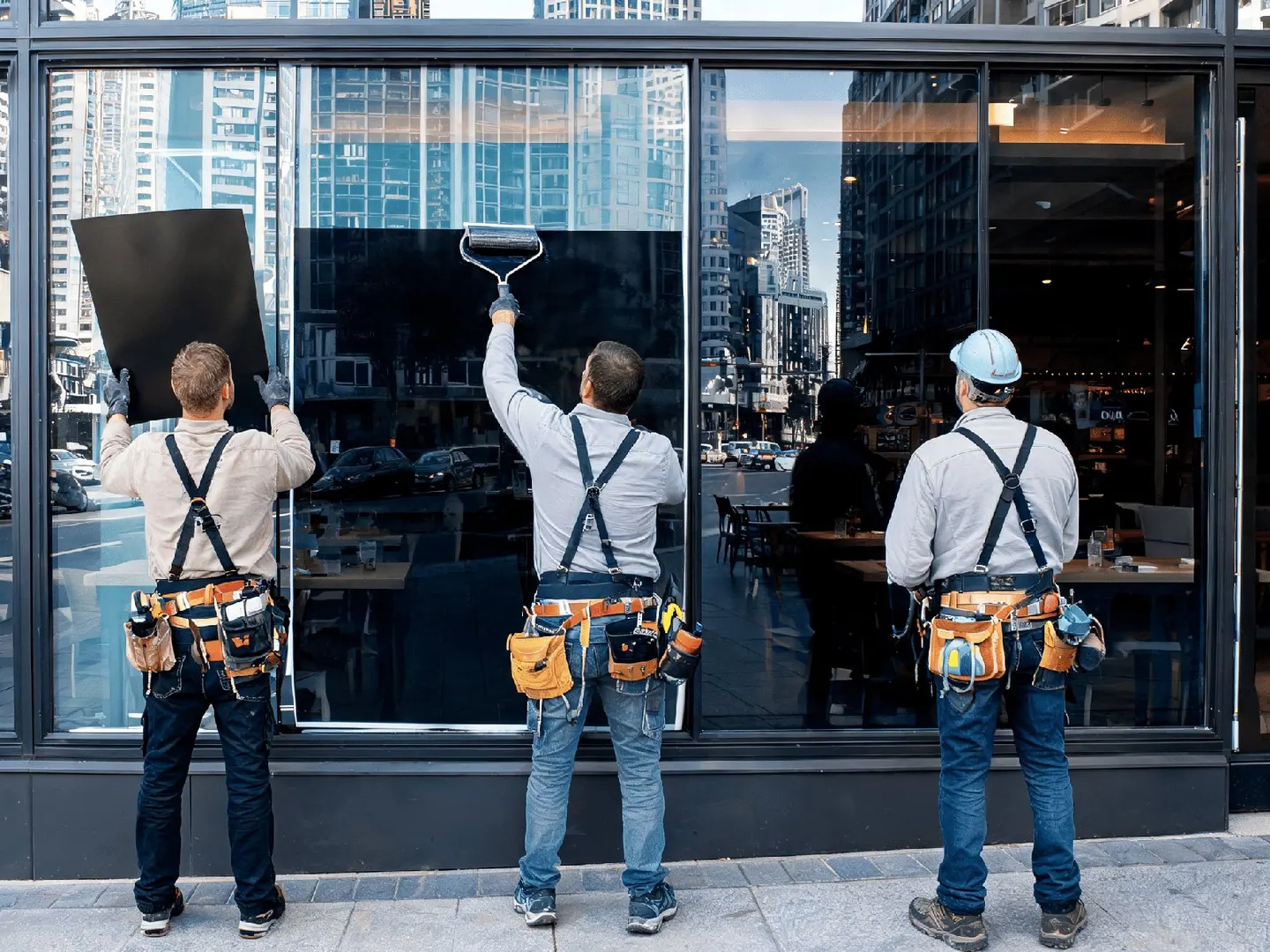
Our service
Commercial window tinting puts film on the glass your business already has: solar film to take heat and glare off desks, frosted film for meeting rooms, safety and anti-graffiti film for shopfronts, and graphics for your brand. We plan the install around your trading hours and quote in writing first.
Updating, replacing and removing signage
Business details change. A new phone number, a new service or a new logo doesn't mean starting again. Single lines of lettering can be swapped, and printed panels can be replaced on their own.
When a vehicle is sold or comes off lease, the vinyl can be removed with gentle heat, and any adhesive residue is cleaned off. Vinyl that has sat in the sun for years can come off in smaller pieces, so removal takes longer, but on healthy factory paint the result is usually clean. The area under the vinyl has been out of the sun, so a light paint correction can help blend it with the surrounding paint.
What drives the cost of vehicle signage
We quote every signage job on the vehicle and the design, because the work varies a lot. These are the main factors.
| Factor | Why it matters |
|---|---|
| Type of signage | Cut lettering uses less material and time than printed graphics, part wraps or full wraps |
| Area covered | More panels means more vinyl, more laminate and more fitting time |
| Vehicle shape | Deep curves, ribbed panels and lots of handles and vents take longer to fit well |
| Design work | A ready-to-print logo is quicker than artwork that needs redrawing or a new layout |
| Number of vehicles | Fleets share one design and are fitted to a schedule |
| Old signage | Removing worn graphics and cleaning off adhesive adds time before new vinyl goes on |
Send us the make and model, photos of the vehicle and your logo, and we'll come back with a written quote. You can send your details online or visit our Condell Park workshop.
Why businesses choose us for signage
We've been fitting film to vehicles since 2016, with a team of 30+ fitters across two workshops. Signage is laid in clean indoor bays, by people who also fit paint protection film and full wraps every day, so edges, curves and handles are handled properly.
Everything sits under one roof. Your vans can be signed, tinted with car window tinting to keep tools out of sight and cabins cooler, and your shopfront branded, all in one quote. If you'd rather change the vehicle's colour and add lettering over it, that can be planned as one job too.
See some of our work: photos of a few cars we’ve finished
Areas we serve
Automotive Signage near you
Customers come to whichever of our two workshops is closer. Pick your suburb for the nearest one and local work.
- Signage & Commercial Film in Revesby2212
- Signage & Commercial Film in Bankstown2200
- Signage & Commercial Film in Padstow2211
- Signage & Commercial Film in Panania2213
- Signage & Commercial Film in Milperra2214
- Signage & Commercial Film in East Hills2213
- Signage & Commercial Film in Georges Hall2198
- Signage & Commercial Film in Condell Park2200
- Signage & Commercial Film in Chester Hill2162
- Signage & Commercial Film in Bass Hill2197
- Signage & Commercial Film in Greenacre2190
- Signage & Commercial Film in Liverpool2170
Questions
Automotive Signage: common questions
Do you design the signage, or do I need artwork?
We design it. Send your logo and the details you want on the vehicle, and we lay it out and send a proof to approve. A vector logo file gives the sharpest print, but we can work from what you have.
How long does vehicle signage last?
Years, with quality vinyl and laminate. Graphics on the roof, bonnet and rear doors take the most sun and age first. Hand washing and parking out of direct sun help it last longer.
Will removing signage damage my van's paint?
Not on healthy factory paint. The vinyl comes off with gentle heat and the adhesive is cleaned away. Resprayed panels carry more risk, so we check them before removal.
Can you put signage on a leased vehicle?
Usually, yes, because vinyl can be removed before the vehicle is returned. Check your lease terms first. Plan removal before the lease ends so there's time to clean up any residue.
Can you match signage across different van models?
Yes. We adapt one master design to each body shape so the logo and details sit in the same places. New vehicles added later are matched from the same files.
How long does it take to sign a ute?
Simple lettering is often done the same day. Printed graphics and wraps take longer, depending on how much of the ute they cover. We confirm the timing with your quote.
Can signage go on the rear window?
Yes, as long as the driver can still see out. Perforated window film that looks solid from outside and see-through from inside is a common choice. We'll suggest what suits your vehicle and how much of the glass it covers.
Can I wash a signwritten vehicle at a car wash?
A hand wash is best. Brush car washes can scuff printed graphics and catch the edges of lettering. If you use a pressure washer, keep it well back from the edges.
Do you make signs for shopfronts and offices too?
Yes. We make window graphics, cut lettering, frosted bands, banners, LED light boxes and acrylic or metal lettering. Your premises and vehicles can carry the same look.
Guides
Read before you book
Plain-English guides on automotive signage, from the people who fit it.
Comparison · Wraps & Signage
Car wrap vs paint: which is the better way to change your car's colour?
A wrap is removable and protects the paint under it, a respray is permanent and lasts longer, and the right choice depends on how long you want the new look.
· 14 min read

Visit us
Two workshops, one team
Tinting Xperts Revesby
Unit 28/172 Milperra Road, Revesby NSW 2212
Mon – Sat · 9:00am – 5:00pm
Tinting Xperts Condell Park
141 Eldridge Road, Condell Park NSW 2200
Mon – Sat · 9:00am – 5:00pm
Reviewed by Mohammad Habboushi, Founder.