
Paint Protection & Care
Ceramic Coating in Sydney, Paint Corrected First
A ceramic coating is a liquid layer that bonds to your clear coat and cures hard, slick and glossy. Water beads off, grime lets go and washing gets quicker. We decontaminate and correct the paint first, then coat it by hand in a clean indoor bay at Revesby or Condell Park.

What it is
What ceramic coating gets you
A ceramic coating is a liquid that bonds to your car's clear coat and cures into a thin, hard, glass-like shell. For ceramic coating in Sydney, we do the whole job in-house at Revesby and Condell Park: the paint is cleaned, corrected and then coated by hand.
Once it has cured, rain beads and rolls off, road film and brake dust have less to grip, and a wash that used to take an hour takes far less. Bird and bat droppings, tree sap and bug splatter sit on the coating instead of biting into the paint, so you have more time to clean them off on a hot day.
Below you'll find what a coating will and won't do, the specification of the coating we apply, why the prep matters more than the bottle, each stage of the application, wheels, glass and trim, coating a new car, the care routine and what sets the cost.
- Hand wash, iron and tar removal and a clay treatment
- Machine paint correction to take out swirls before coating
- Every panel wiped down so the coating bonds to bare clear coat
- Coating applied by hand and levelled under inspection lights
- Wheels, glass and exterior trim coating on request
- The coating maker's warranty and a written care routine
What a ceramic coating does, and what it doesn't
Think of a coating as a sacrificial, slippery layer over your clear coat. It doesn't change the colour of the car. It changes how the surface behaves: how water leaves it, how easily dirt comes off and how well the gloss holds up between washes.
What you'll notice after coating
Water beading and sheeting. Rain gathers into tight beads and runs off, taking light dust with it.
Quicker, gentler washes. Grime releases with a rinse and a soft mitt, so there's less rubbing and less risk of new swirls.
A deeper, wetter gloss on paint that has been properly corrected first.
More time to deal with droppings and sap. They still need cleaning off, but they're slower to etch through to the clear coat.
UV resistance, so the sun works on the coating rather than straight on the clear coat.
Less brake dust baked onto wheels, if you have the wheel faces coated too.
What a coating can't do
A coating is far too thin to stop a stone chip. A stone that would have marked bare paint will mark coated paint as well. It won't fill scratches, hide swirl marks or repair faded clear coat either, because it's clear and it sits on whatever is underneath.
It also doesn't make a car self-cleaning. A coated car still gets dirty; it just cleans up faster. Water spots can still form if hard water dries on hot paint, so drying the car properly still matters.
The ceramic coating we apply
These are the published figures for the ceramic coating we use. Numbers on a coating bottle are easy to misread, so the right-hand column says what each one means on a car you drive every day.
| Property | Rating | What it means for you |
|---|---|---|
| Hardness | 9H | The top of the pencil hardness scale. It resists light marring from washing, but it isn't scratch-proof and won't stop chips. |
| Make-up | 70%+ active composition, inorganic glass formula | Most of what goes on the paint is the protective glass layer rather than carrier solvent. |
| Solvents | VOC-free | Kinder to the people applying it and to the air in the workshop. |
| Chemical resistance | pH 1 to pH 14 | Stands up to acidic droppings and strong alkaline cleaners far better than wax, though nothing should be left to sit. |
| Water beading | Contact angle over 105° | Super-hydrophobic: water forms high, round beads and rolls off a tilted panel easily. |
| UV | Strong UV resistance | Helps slow the dulling and fading that the Sydney sun causes on unprotected clear coat. |
The coating carries its maker's warranty, which we give you in writing with your invoice. How long any coating keeps performing depends on prep, washing habits and where the car is parked. Our guide to how long ceramic coating lasts covers that in detail.
Decontamination and paint correction come first
The bottle matters less than what happens before it's opened. A coating locks in the surface it bonds to, and its gloss makes defects underneath easier to see. Coat over swirls and you'll be looking at sealed-in swirls for as long as the coating lasts.
Why decontamination matters
Paint that looks clean is often carrying bonded contamination: iron fallout from brake dust and rail lines, tar from the road, overspray and old sap. Run your hand over the bonnet inside a plastic sandwich bag and you'll feel it as grit. If it stays, the coating bonds to the grit instead of the clear coat.
Why we polish before coating
Most swirls, holograms and light scratches sit in the top of the clear coat. Machine polishing levels the clear coat around them so light reflects evenly again. Scratches through to the colour coat can't be polished out, and we'll tell you if any of yours are that deep.
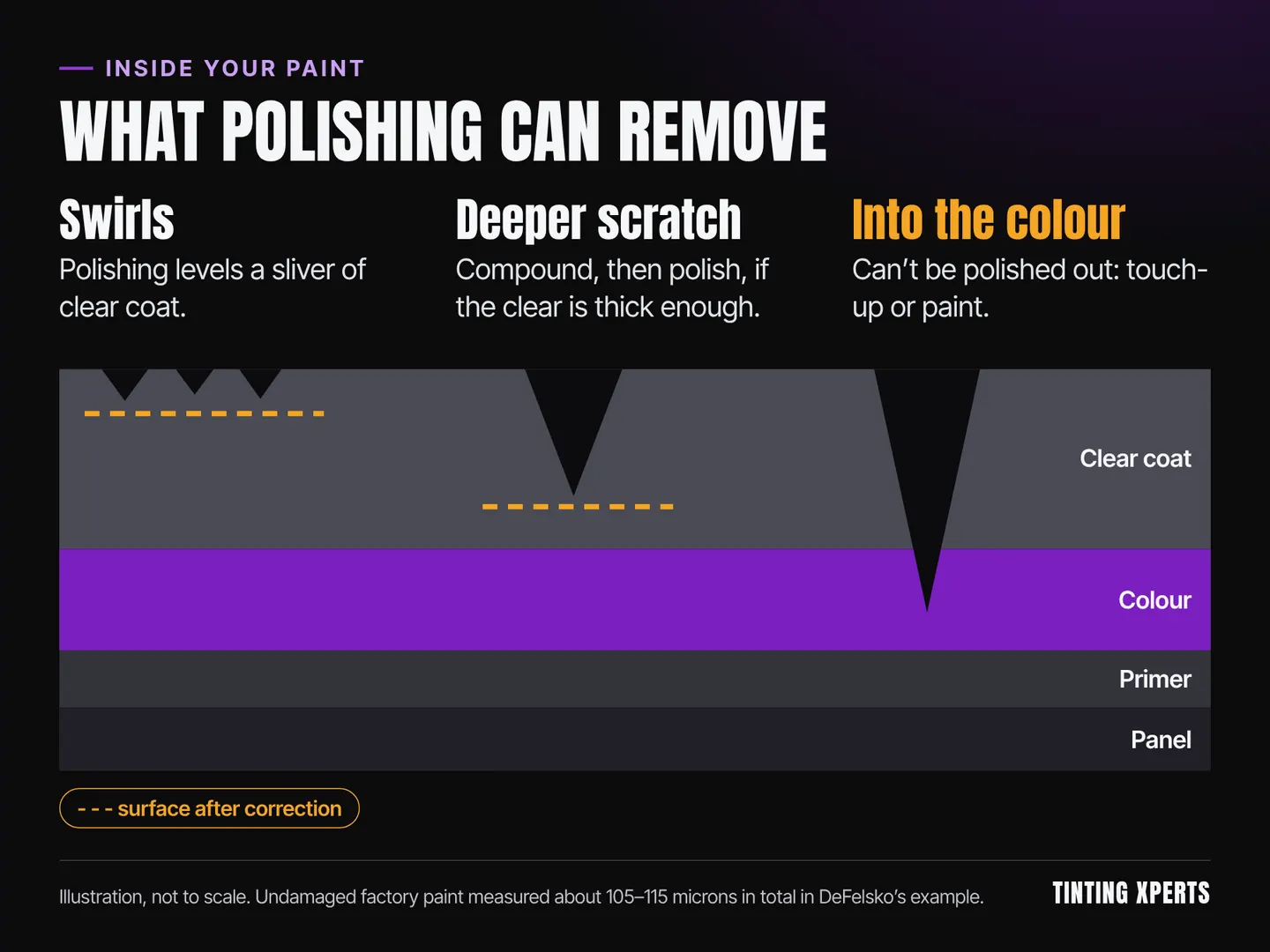
How much correction your car needs depends on its age, colour and how it's been washed. A dark car that's been through brush washes for years needs more work than a pale car that's been hand washed. Our paint correction page explains the stages, and the guide to what paint correction is covers the basics. If you're battling marks between visits, read our guide on how to remove swirl marks safely.
How we apply a ceramic coating
A coating is laid down panel by panel in a clean indoor bay, where we control dust, sunlight and panel temperature. Here is each stage, in order.
Inspect the paint with you
We look over the car together under good light, note chips, resprays and thin spots, and agree the coating, the surfaces and the level of correction in a written quote.
Wash and decontaminate
A pre-wash foam and a two-bucket hand wash take off loose dirt. Iron and tar removers dissolve bonded particles, and a clay treatment lifts what's left until the paint feels like glass.
Correct the paint
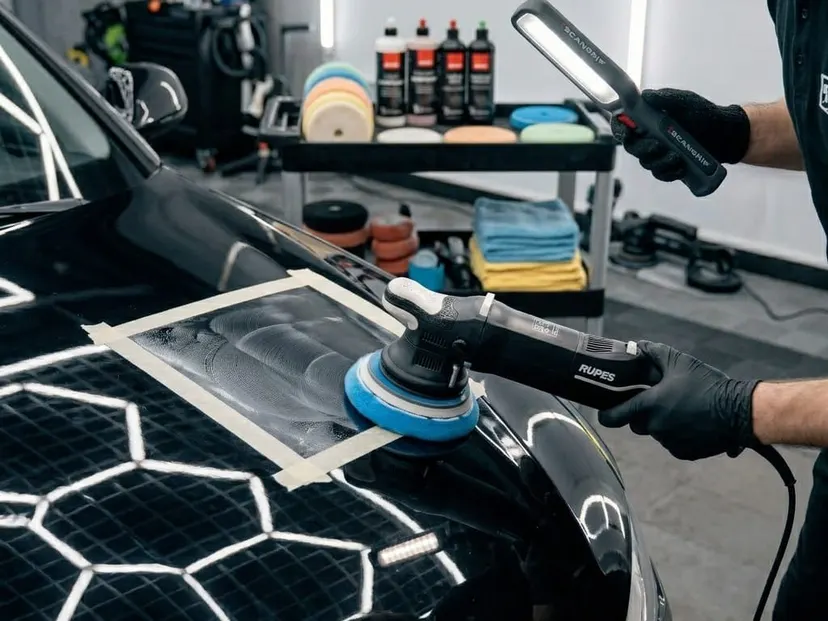
Panels are taped off and machine polished to level swirls and light scratches. We check our progress with an inspection light, because overhead lighting hides fine marks.
Strip the panels back to bare clear coat
Polishing leaves oils behind that would stop the coating bonding. Every panel is wiped down with a panel prep solution so the coating meets clean clear coat and nothing else.
Apply and level the coating
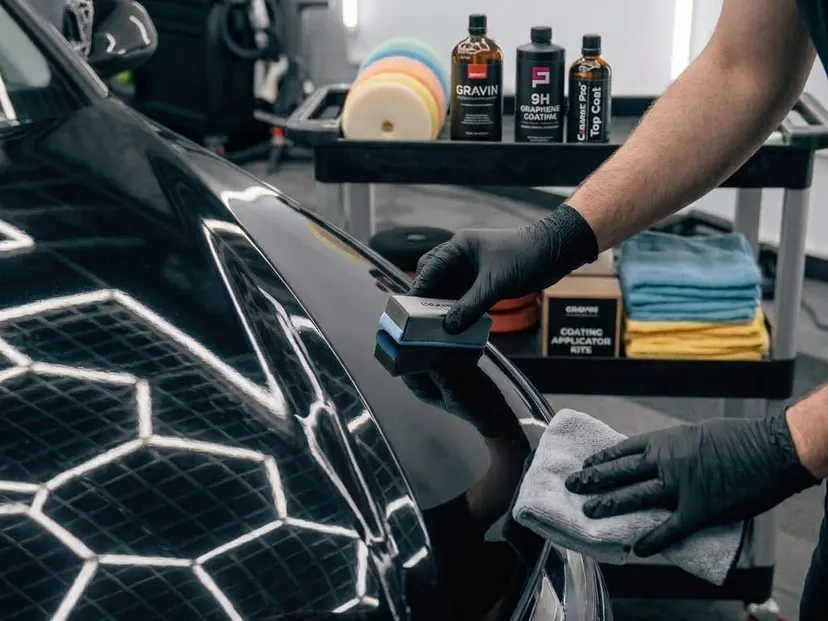
The coating goes on by hand with an applicator block in small sections, in overlapping passes. After a short flash time, each section is levelled with a soft microfibre towel so no high spots are left behind.
Check under lights, then cure
Every panel is checked from several angles for streaks or high spots while they can still be fixed. The car then stays indoors and dry while the coating sets.
Hand over with a care routine
You collect the car with the maker's warranty details and a written care routine, including how long to wait before the first wash.
Coating wheels, glass and trim
Paint is the main event, but other surfaces gain just as much from a coating. Each one uses a coating suited to it, because wheels get hot and glass is wiped by wipers.
Wheels and calipers. Brake dust is hot and corrosive, and it bakes onto bare wheel faces. A coating on the faces and barrels means most of it rinses off. It works best with the wheels off the car, so we can reach the inner barrel.
Windscreen and side glass. A glass coating makes rain bead and blow off at speed, so you rely less on the wipers. It also makes bugs and dried water marks easier to clean.
Exterior plastic trim. Unpainted black trim greys in the sun. A trim coating darkens it again and slows the fading, without the greasy look of a dressing.
Painted calipers, exhaust tips and door shuts can be added where the coating suits the surface.
If you're also having the windows tinted, glass coating goes on the outside of the glass only. Tint sits on the inside, so ceramic window tinting and a glass coating can be done at the same visit.
Ceramic coating a new car
A new car is the easiest car to coat well. It hasn't been washed badly for years, so correction is usually light, and the coating protects the finish from its first wash onwards.
New paint still needs checking
New cars are washed at the port, at the dealer and again before delivery, often quickly. That can leave light swirls, holograms or water marks before you've driven a kilometre. We inspect new paint as carefully as old, and a single polishing stage is often all it needs.
Dealer protection packages
Ask the dealer what their paint protection is before you pay for it, and who applies it. Some packages are a sealant wiped on in the delivery bay without correction. You're free to decline it and book a coating with us after you collect the car.
One visit for the lot
Owners of new cars often book everything together: film on the front, a coating over the whole car including the film, and tint on the glass. The car stays with one team for the visit, and you get one quote and one invoice.
Our service
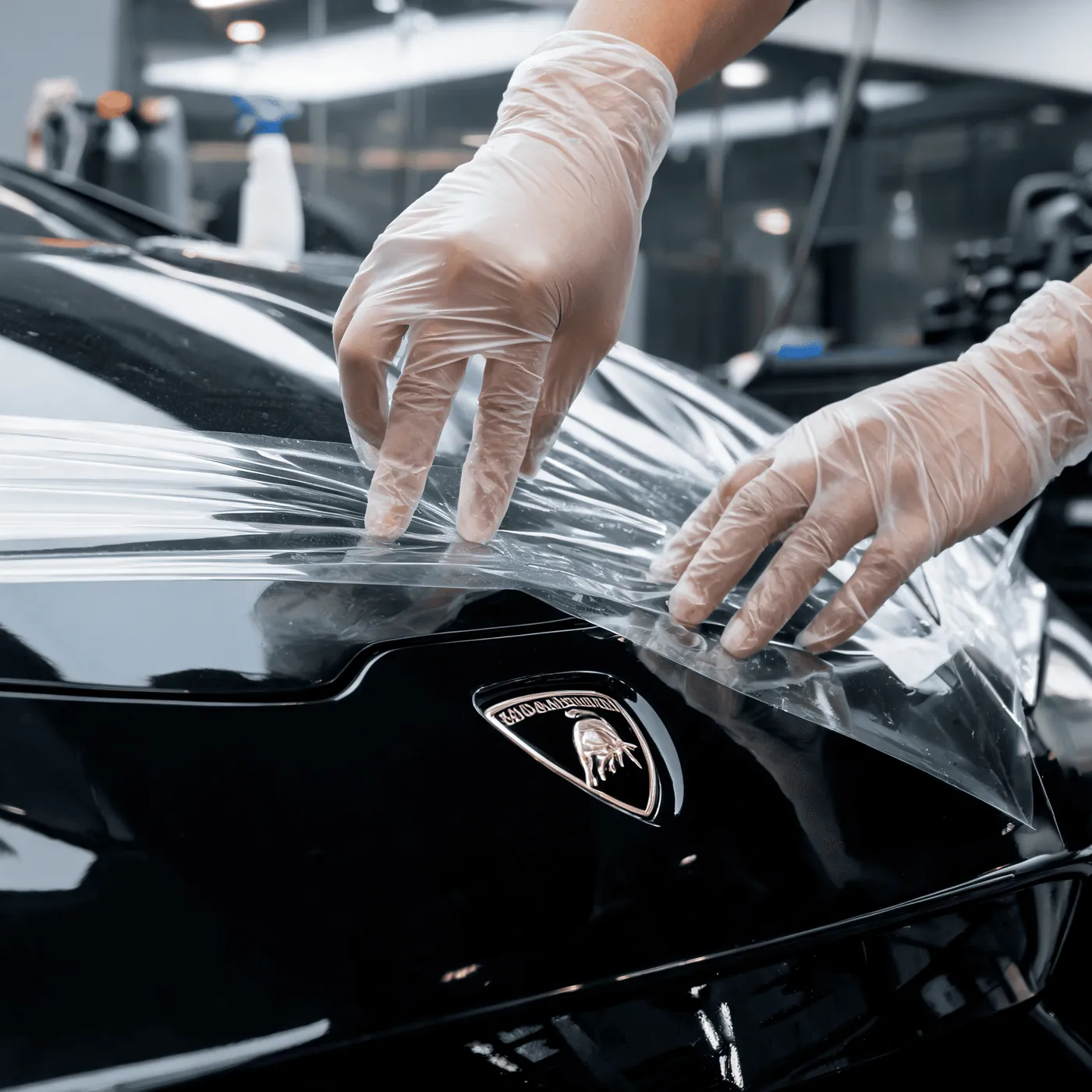
Paint protection film is a clear, self-healing urethane layer fitted over your paint. It takes the stone chips, grit and scuffs that would mark the panels. We correct the paint, then fit gloss, matte or colour film, from partial front to full body, at Revesby and Condell Park.
Living with a ceramic-coated car
A coated car is easy to keep clean, as long as the washing doesn't undo the work. The routine is simple, and it's the same one that keeps any good paint looking right.
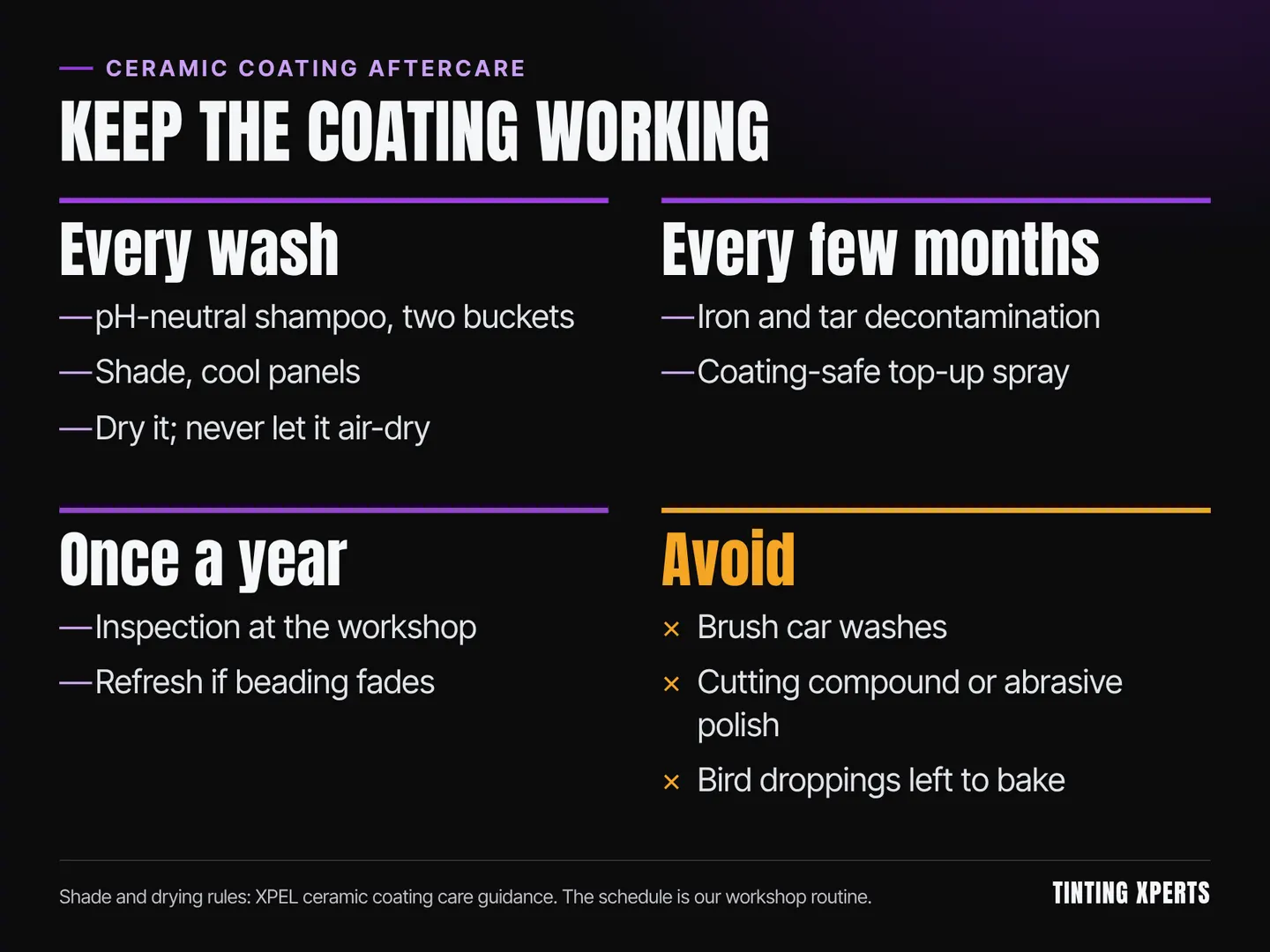
Rinse first. Take off loose grit with a rinse or a snow foam before a mitt touches the paint.
Wash in the shade with a pH-neutral shampoo and two buckets, one for the soapy water and one for rinsing the mitt.
Dry the car with a clean, plush drying towel or a blower instead of letting it air-dry.
Decontaminate every few months with an iron remover to clear fallout the coating has been holding off.
Top up with a coating-safe spray when the beading on the bonnet and roof starts to slow.
Book a check once a year so we can look at the coating and refresh any area that's wearing.
Avoid brush car washes, cutting polishes and harsh degreasers, and don't leave droppings to bake on. Waxes aren't needed, and they cover up the coating's own behaviour. For signs a coating is wearing and what shortens its life, see our guide on how long ceramic coating lasts.
Choosing between coating, graphene and film
We often get asked whether a coating is enough, or whether another product suits better. The short version: a coating keeps paint glossy and easy to clean, film stops chips, and many cars benefit from both. Our guide to PPF vs ceramic coating walks through that choice.
If your car lives outside, under trees or on the street, a graphene coating is worth a look too. It's a coating of the same family with graphene added. Our guide to graphene vs ceramic coating sets out where it differs and where it doesn't.
What decides the cost of a ceramic coating
We quote every coating after seeing the paint, because two cars of the same model can need very different amounts of work. The main factors are:
The paint's condition. Correction is often the longest part of the job, and paint with heavy swirls takes more stages.
The car's size. A large SUV or a ute has more surface to correct and coat than a small hatch.
The coating chosen. Different coatings have different costs and different maker's warranties.
The surfaces included. Wheels off the car, glass, trim and calipers each add time.
Film on the car. Coating over paint protection film needs a film-safe prep and a coating suited to it.
Other work at the same visit, such as tint or film, which we can quote together.
Tell us the make, model and colour, and send a photo of the bonnet in sunlight if you can. You'll get a written quote with no extras added on the day. Payment is by cash, card, Afterpay or AMEX.
Why have your car coated at Tinting Xperts
We have been looking after paint and glass in south-west Sydney since 2016. More than 30 fitters work across our two workshops, and the people who correct your paint are the same people who coat it.
Clean indoor bays, so no dust, sun or wind gets between the coating and the paint.
Paint corrected before every coating, never a coat straight over swirls.
VOC-free coatings with published specifications.
The coating maker's warranty, handed over in writing with your invoice.
Coating, film, tint, wraps and detailing in one booking, so the car isn't shuttled between shops.
Book a look at your paint at our Revesby workshop or our Condell Park workshop, or ask for a written ceramic coating quote and we'll come back to you with the options for your car.
In their words
What some of our customers say
“Just had my new car in for window tinting and a ceramic coating, and the results are incredible. The car looks amazing, the tint is perfect, and the gloss from the coating is next level. Professional crew, fair pricing, and top-tier workmanship. Will definitely be bringing my future vehicles here! Highly recommended!”
Kazi tushar · Window Tinting & Ceramic Coating · on Google “Tinting Xperts did an amazing job on my Mustang—ceramic coating and tints look flawless. Top-quality at a great price. You can tell they take pride in their work. Highly recommend!”
Nik · Ceramic Coating & Tint · on Google “Had tints and ceramic coating done on my Tiguan R. Couldn't be happier. Top quality work.”
Michael Lowry · Ceramic Coating & Tint · on Google “Thorough professional, left my car nice and shiny with ceramic coating. Not only was the final finish amazing , gave lots of valuable information about car cleaning tips, the technology used and so on. I was recommended to him by a friend and surely I’ll recommended him to others.”
Talal Khan · Ceramic Coating · on Google “Got ceramic tint and coating package for my corolla cross and Mo has done an amazing job on it. Professional, humble and very good price. I'll definitely recommend Mo for his work to friends and family”
Steven Luu · Ceramic Tint & Coating · on Google “had a ceramic package and tinting done with TintingXperts, and I’m really happy with the result. The workmanship looks great, and Alex was very nice and easy to deal with throughout the process. Everything was handled professionally, and I’d definitely recommend them to anyone looking for quality work and good service.”
Ray Daud · Ceramic Coating & Tint · on Google
See some of our work: photos of a few cars we’ve finished
Areas we serve
Ceramic Coating near you
Customers come to whichever of our two workshops is closer. Pick your suburb for the nearest one and local work.
- Ceramic Coating in Revesby2212
- Ceramic Coating in Bankstown2200
- Ceramic Coating in Padstow2211
- Ceramic Coating in Panania2213
- Ceramic Coating in Milperra2214
- Ceramic Coating in East Hills2213
- Ceramic Coating in Georges Hall2198
- Ceramic Coating in Condell Park2200
- Ceramic Coating in Chester Hill2162
- Ceramic Coating in Bass Hill2197
- Ceramic Coating in Greenacre2190
- Ceramic Coating in Liverpool2170
Questions
Ceramic Coating: common questions
How soon can I wash my car after a ceramic coating?
Wait until the date on your care sheet, which depends on the coating we've applied. Until then, keep the car dry where you can and rinse off droppings gently with water. Once that wait is over, wash it with a pH-neutral shampoo and dry it properly.
Does ceramic coating stop stone chips and scratches?
No. A coating is far too thin to stop a stone chip, and it only resists the fine marring that comes from washing. For chips and scuffs, fit paint protection film to the panels that face the road and coat over it.
Can I take a ceramic-coated car through an automatic car wash?
Avoid brush and cloth car washes, because they drag grit across the paint and wear the coating down. A hand wash is best. If you have to use an automatic wash, choose a touchless one and skip the wax add-ons.
Will a ceramic coating hide swirl marks?
No, it tends to make them easier to see, because the coating adds gloss over whatever is underneath. That's why we correct the paint before coating. Marks in the clear coat are polished out first, and then the coating seals in the corrected finish.
Do I need to wax a car with a ceramic coating?
No. Wax sits on top of the coating, hides its water beading and wears off quickly. If the coating needs a boost, use a coating-safe top-up spray instead.
Can you ceramic coat matte paint or a vinyl wrap?
Yes, with a coating made for matte and satin finishes, which protects the surface without adding gloss. Matte paint can't be polished, so a coating made for it is one of the best ways to keep it clean. Vinyl wraps can be coated the same way once the wrap has settled.
Is ceramic coating worth it on a car that's parked outside?
It's often worth more on a car parked outside, because droppings, sap, dust and sun all hit it harder. The coating buys you time to clean contamination off before it marks the paint. Washing the car regularly still matters.
How long will you need my car for a ceramic coating?
That depends mostly on how much paint correction the car needs, and whether wheels and glass are included. A new car with light correction is a shorter job than an older dark car with heavy swirls. We confirm drop-off and pick-up times when we quote.
What warranty comes with a ceramic coating?
The coating carries its maker's warranty, and we hand you the terms in writing with your invoice. Coating warranties usually expect the car to be washed correctly and inspected as the maker asks. Your care sheet tells you what's needed.
Can a ceramic coating be removed?
Yes, but not with a wash. A coating wears away slowly, and it can be taken off deliberately by machine polishing. That's also how a worn or damaged area is prepared before it's recoated.
Guides
Read before you book
Plain-English guides on ceramic coating, from the people who fit it.
Guide · Detailing & Paint Correction
What is paint correction? How it removes swirls and scratches, and when it's worth it
Paint correction levels your clear coat by machine to take swirls, haze and light scratches out for good, and it's the step that decides how a coating or film will look.
· 11 min read
Comparison · Paint Protection
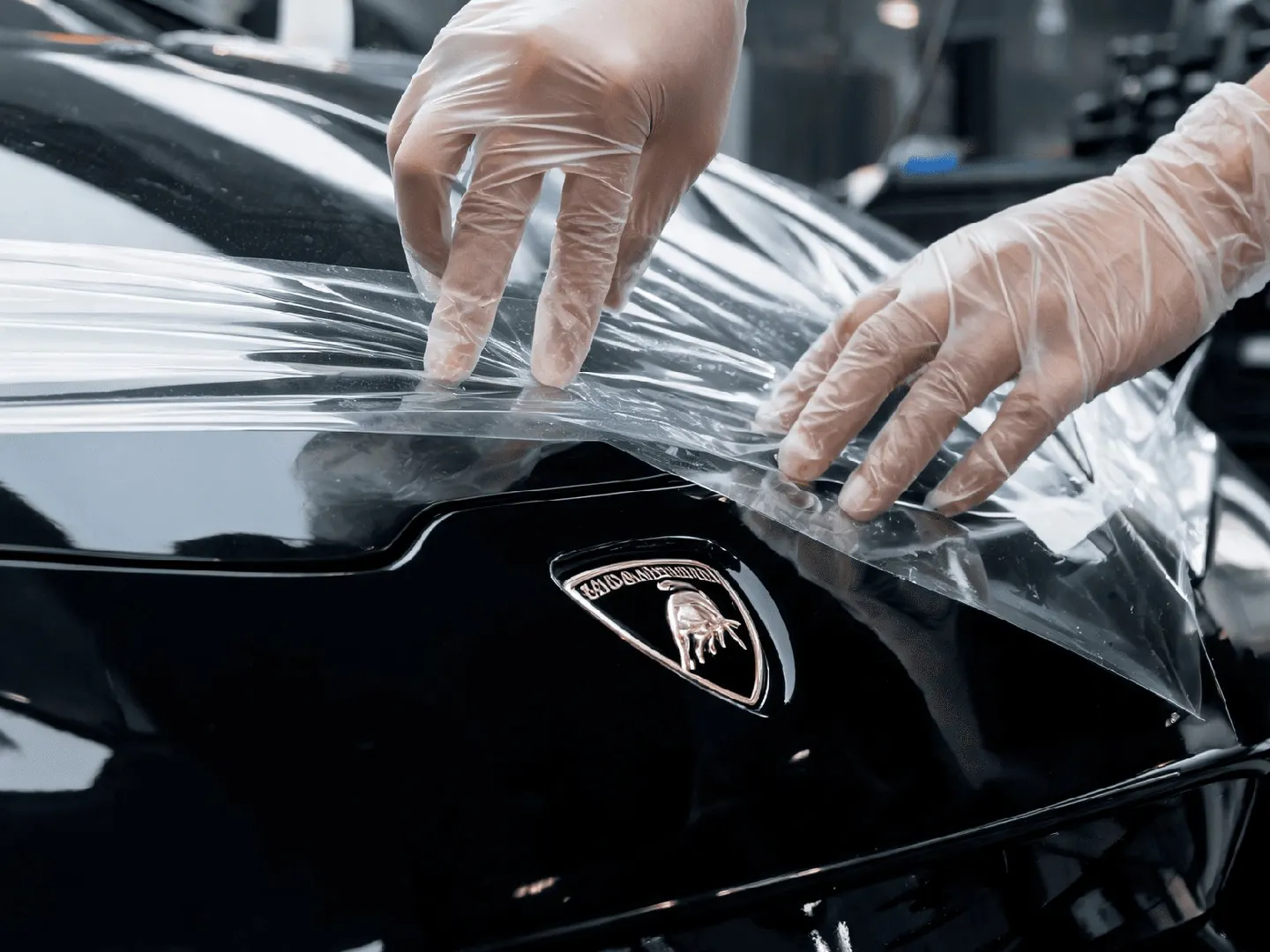
PPF vs ceramic coating: which protects your paint better?
Film stops stone chips, a coating makes paint glossy and easy to clean, and the right choice depends on how and where you drive.
· 11 min read
Comparison · Ceramic & Graphene Coatings
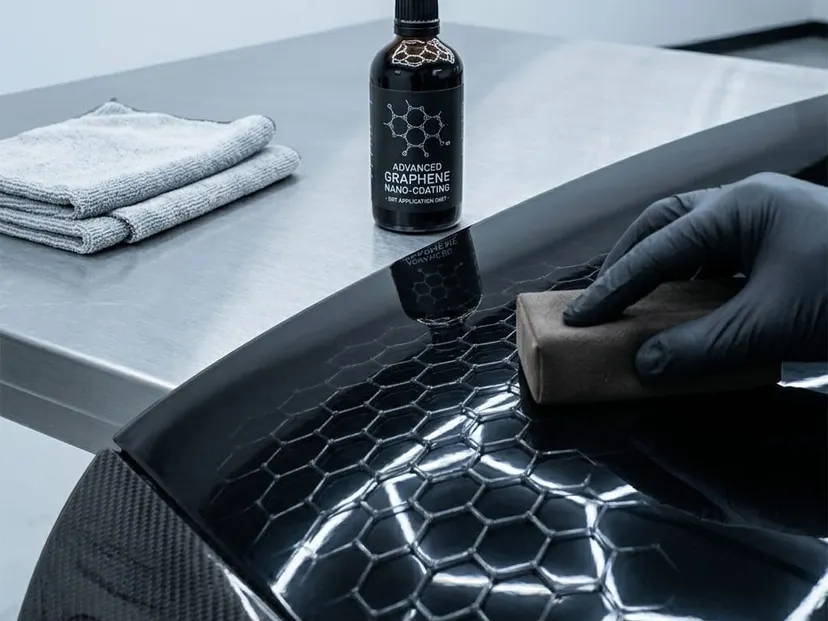
Graphene vs ceramic coating: what's really different, and which suits your car
A graphene coating is a ceramic coating with carbon added; here's what that changes, what it doesn't, and how to choose for a Sydney car.
· 11 min read


Visit us
Two workshops, one team
Tinting Xperts Revesby
Unit 28/172 Milperra Road, Revesby NSW 2212
Mon – Sat · 9:00am – 5:00pm
Tinting Xperts Condell Park
141 Eldridge Road, Condell Park NSW 2200
Mon – Sat · 9:00am – 5:00pm
Reviewed by Mohammad Habboushi, Founder.