
Window Tinting
Commercial Window Tinting in Sydney for Offices and Shops
Commercial window tinting puts film on the glass your business already has: solar film to take heat and glare off desks, frosted film for meeting rooms, safety and anti-graffiti film for shopfronts, and graphics for your brand. We plan the install around your trading hours and quote in writing first.

What it is
What commercial window tinting gets you
Commercial window tinting in Sydney means fitting film to the inside of the glass in your office, shop, warehouse or strata building. It takes the heat and glare off desks, gives meeting rooms privacy, holds a broken shopfront together and puts your brand on the glass, all without replacing a single pane.
Most businesses come to us with one problem, such as a west-facing office nobody wants to sit in, a reception area that's on show to the street, or a shopfront that keeps getting scratched. The answer is often two or three films working together, chosen area by area.
We arrange commercial jobs from our workshops in Revesby and Condell Park and fit on site. Tell us your trading hours and what's bothering you, and we'll plan the work so your business keeps running while we're there.
- A look at the glass, the sun it gets and what each area needs
- Film checked as suitable for your type of glass
- Samples and product details for landlords and strata to approve
- Installs planned around your trading hours
- Desks, stock and floors protected while we work
- Each pane cleaned, filmed, edge-trimmed and checked in daylight
- A written quote before any film is cut
What commercial window tinting does for a business
Building glass is chosen for the architect's drawings, not for the person sitting next to it at four in the afternoon. Film changes how that glass behaves, and it can be changed again when your needs do.
Comfort at the desk: solar film turns down the heat and glare that make window seats the least popular in the office.
Privacy where it matters: frosted and decorative film for meeting rooms, consulting rooms and glass partitions.
Daytime screening: one-way film for street-facing glass that should stay bright inside.
Protection: safety film holds broken glass in place, and anti-graffiti film takes the scratches instead of the glass.
Branding: cut lettering, logos and frosted bands that tell people who you are before they walk in.
Slower fading: film filters most of the UV that bleaches stock, carpet and furniture near the windows.
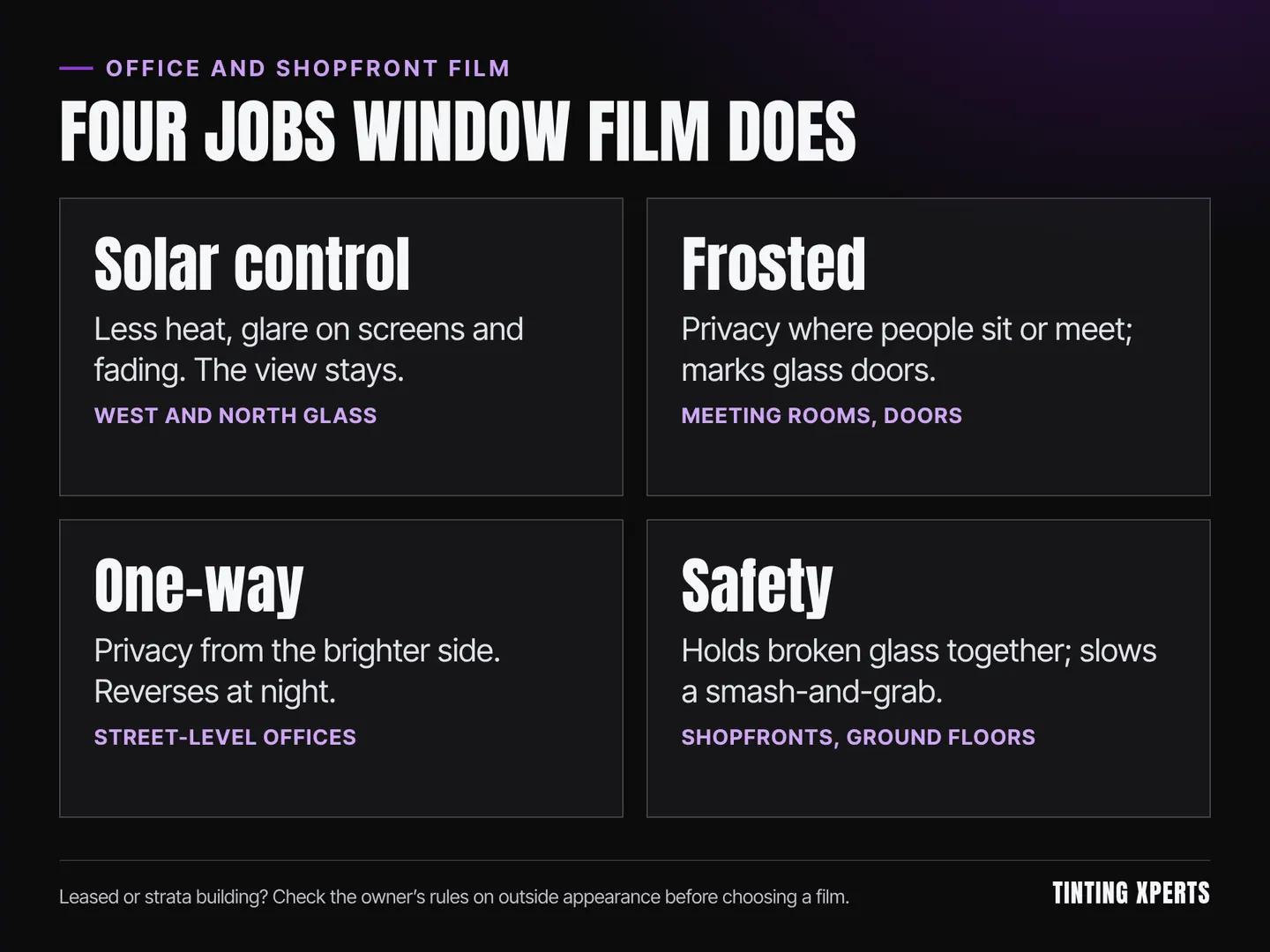
If you're comparing products for a workplace, our guide to office window film explains each type in more depth. The rest of this page is about how we apply them to real buildings.
Heat and glare at the desk
Ask staff where they least like to sit, and it's usually beside the glass on the hot side of the building. The sun comes in low, the screen washes out, and the air conditioning never quite wins. The usual fix is to pull the blinds, which throws away the daylight and the view the space was designed around.
Solar control film tackles the cause instead. It cuts the heat and glare arriving through the glass, so the blinds can stay up for more of the day. Films range from almost clear to noticeably tinted, and the right one depends on how much glare you're fighting and how much daylight you want to keep.
Which glass to start with
In Sydney the western glass usually causes the most trouble, followed by east-facing rooms with morning sun across the screens. We look at where desks, counters and screens sit, and when the problem peaks, before suggesting where film goes. Often only part of the building needs it.
Warehouses, workshops and showrooms
Big panes, skylights and roller-door glazing can turn a warehouse or showroom into a hot box by mid-afternoon. Film on the worst of that glass helps the people working underneath it and protects stock on display from fading.
Privacy for meeting rooms and glass partitions
Open-plan offices love glass walls until someone needs a private conversation. Frosted film gives you that privacy and still lets light through, so the room doesn't feel like a cupboard.
Full frosting for consulting rooms, interview rooms and bathrooms.
A frosted band at eye height, which hides people sitting at the table but keeps the room open above and below.
Decorative patterns, gradients and lines that add privacy and a finished look at the same time.
Cut-out logos and lettering in the frosted film, so a partition doubles as signage.
Manifestation strips across glass doors and walls, so nobody walks into the glass.
Because film is cut to each pane, a band or pattern can line up exactly across a run of partitions. And when you move tenancy or change the layout, it can be removed without replacing the glass.
One-way film, and why it stops working at night
One-way film is a reflective film that makes glass look like a mirror from the brighter side. During the day, the street sees a reflection and you see out. It's popular for ground-floor offices, reception areas and shops that want to keep the inside bright.
The catch is that it depends on the light. Once it's darker outside than inside, the effect flips, and people on the street can see straight into a lit room. That surprises a lot of businesses that work late or keep the lights on after close.
Reflective films also change how a building looks from the street, which is something your landlord or strata may want to approve first.
Safety and anti-graffiti film for shopfronts
Safety and security film
Safety film is a thick, clear film that holds glass together when it breaks. On older shopfronts and low panes that aren't safety glass, that means fewer loose shards near customers and staff. It also slows down a smash-and-grab, because the pane doesn't simply fall out of the frame. It's a delay, not a guarantee, but it can buy enough time to matter.
Anti-graffiti film
Scratched tags on a shopfront are expensive to fix if they're in the glass itself. Anti-graffiti film is a clear, replaceable layer fitted to the outside of the glass. When it gets scratched or tagged, the film is stripped and renewed, and the glass underneath stays untouched.

Shopfront graphics and signage on glass
Your shop window is the cheapest advertising space you have. The same films we use for privacy can carry your brand, and printed or cut vinyl adds colour and detail.
Business name, logo and opening hours on the door
Frosted panels with your logo cut out of them
Window graphics for products, services and seasonal promotions
Contact details sized to be read from across the street
Graphics and signage are produced by the same team that does our vehicle signage, so your vans and your shopfront can carry the same design. It's often worth combining solar or safety film with graphics in one visit.
Film types by building and space
Every building is a mix of problems, so most commercial jobs end up using more than one film. This is where each tends to go.
| Space | Usual problem | Films that suit it |
|---|---|---|
| Open-plan offices | Heat and glare at window desks | Solar control, light enough to keep daylight |
| Meeting and consulting rooms | Conversations on show | Frosted or decorative film, often as a band |
| Ground-floor reception | Privacy from the street during the day | One-way film, with blinds for after dark |
| Retail shopfronts | Fading stock, breakage and scratched glass | Solar, safety and anti-graffiti film, plus graphics |
| Warehouses and showrooms | Heat through large panes and skylights | Solar control on the worst-affected glass |
| Strata common areas | Glare in lobbies, privacy in shared spaces | Neutral, low-reflective film the committee can approve |
Installing film around your trading hours
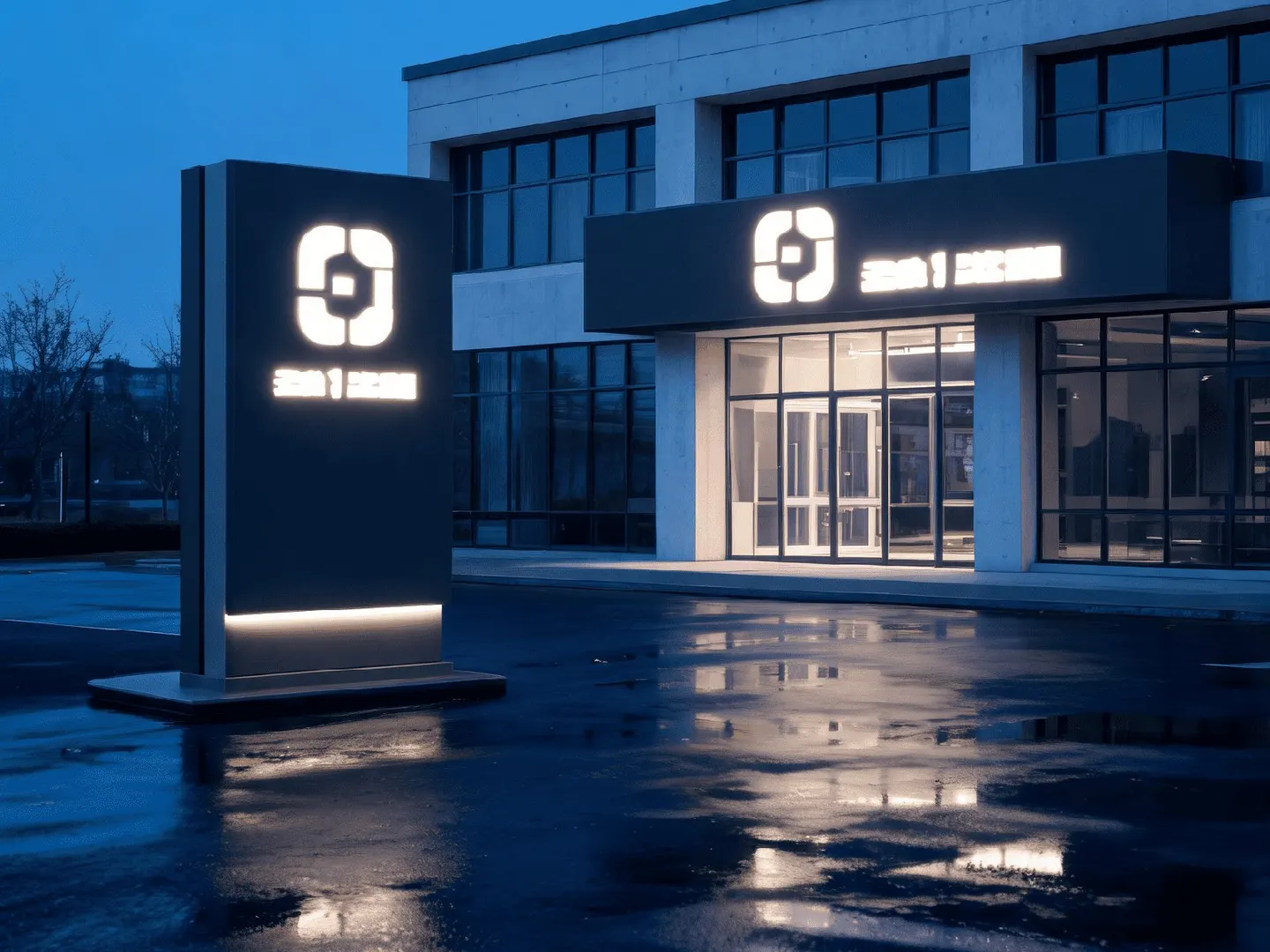
Film needs no building work, but it does need clean glass and a clear space in front of it. Tell us your trading hours, and we'll plan the work around them.
Look at the site
We look at the glass, which way it faces, how it's used and what you want to fix. Send photos first and we'll tell you if a visit is needed.
Check the glass and get approvals
We identify the glass type and choose film that suits it. You get samples and product details to share with your landlord or strata committee.
Plan the work around you
We agree which areas we start in and in what order, so the parts of the business you need stay open while we work.
Protect, clean and fit
Desks and stock are moved back, floors and sills covered, and every pane cleaned before the film is cut, fitted and squeegeed.
Inspect and hand back
We check every pane in daylight, put the space back as we found it, and explain how to clean the film while it dries.
Fresh film can look slightly hazy for a while as the water behind it dries. That clears on its own. Once it has, film needs only a soft cloth and a mild, ammonia-free cleaner, so let your cleaning contractor know which panes are filmed.
Leases, landlords and strata
If you lease your premises or sit in a strata building, the glass may not be yours to change. Check your lease and the by-laws, and ask before you book, especially for reflective or decorative film that changes the look from the street.
Most landlords are comfortable with film once they see what it is. A neutral, low-reflective product is the easiest to get approved, and most films can come off cleanly at the end of a lease. We provide samples and product details so the decision is easy to make.
What affects a commercial window tinting quote
We don't publish prices for commercial work, because no two buildings are the same job. We quote each site in writing, and these are the things that change the figure:
The total area of glass, and how many panes it's split into.
The films you choose, since solar, frosted, one-way, safety and anti-graffiti films are different products.
Access, such as high glazing, stairwells, skylights or glass above a busy shop floor.
Large or awkward panes that need two installers and careful handling.
Old film to remove, including the glue it leaves behind.
Design work for logos, frosted bands, cut-outs and printed graphics.
Scheduling, depending on how the work has to fit around your trading hours.
Send us photos of your glass, which way it faces and what you'd like to fix. We'll come back with a written quote, and arrange a visit where the job needs one.
Why businesses work with Tinting Xperts
Tinting Xperts was founded in 2016 and has grown to more than 30 fitters. Fitting film is all we do all day, on cars, homes and commercial glass, and the same care that goes into a car door goes into a floor-to-ceiling shopfront. Every quote is in writing before any film is cut.
Speak to the team at our Revesby workshop or our Condell Park workshop, Monday to Saturday. If your home needs the same treatment, our residential window tinting covers houses and apartments, and a work car can be done with car window tinting at either workshop.

Our service
Vehicle signage puts your business name, number and brand on your vans, utes and cars. We design it, send a proof, then print or cut it and fit it indoors at Revesby and Condell Park, from simple lettering on one ute to matching graphics across a whole fleet.
See some of our work: photos of a few cars we’ve finished
Areas we serve
Commercial Window Tinting near you
Customers come to whichever of our two workshops is closer. Pick your suburb for the nearest one and local work.
- Commercial Window Tinting in Revesby2212
- Commercial Window Tinting in Bankstown2200
- Commercial Window Tinting in Padstow2211
- Commercial Window Tinting in Panania2213
- Commercial Window Tinting in Milperra2214
- Commercial Window Tinting in East Hills2213
- Commercial Window Tinting in Georges Hall2198
- Commercial Window Tinting in Condell Park2200
- Commercial Window Tinting in Chester Hill2162
- Commercial Window Tinting in Bass Hill2197
- Commercial Window Tinting in Greenacre2190
- Commercial Window Tinting in Liverpool2170
Questions
Commercial Window Tinting: common questions
Does commercial window film reduce heat in an office?
Yes. Solar control film cuts a share of the heat that comes in with the sun, which is the warmth people feel sitting beside the glass. It also cuts glare, so blinds can stay open for more of the day.
Can you fit window film while my business is open?
Often, yes. We work area by area and plan the order around you, so the parts of the business you need stay open. Tell us your trading hours when you ask for a quote and we'll plan the job around them.
Can commercial window film come off when our lease ends?
Most films can be removed cleanly, and the glue cleaned off the glass. That makes film a good fit for leased premises. Check your lease terms, because some landlords ask for the glass to be returned as it was.
Do I need landlord or strata approval for window tinting?
Often, yes, especially for film that changes the look of the building from outside. Ask before you book. We provide samples and product details to help you get approval.
Does one-way window film work at night?
No. One-way film only works while it's brighter outside than inside. After dark, with the lights on, people outside can see in. Use blinds or frosted film where you need privacy at night.
What is anti-graffiti window film?
It's a clear, replaceable film fitted to the outside of the glass. Scratches and tags land on the film instead of the glass. When it's damaged, the film is replaced and the glass stays as it was.
Will window film make my shop look closed or dark?
Not with the right film. Light, neutral solar films change the look of the glass very little while still cutting heat and fading. We show you samples on your own glass before you decide.
Can you put our logo on the glass as well?
Yes. We cut logos and lettering in vinyl or frosted film, and produce window graphics and signage. It can often be done in the same visit as the solar or safety film.
How do I get a quote for commercial window tinting?
Send us photos of the glass, which way it faces and what you want to fix. We'll reply with a written quote, and arrange a site visit where the job needs measuring.
Guides
Read before you book
Plain-English guides on commercial window tinting, from the people who fit it.
Guide · Home & Commercial Film
Office window film: glare, heat, privacy and safety for your workplace
How film on existing office glass cuts screen glare and afternoon heat, adds privacy to meeting rooms, holds broken glass together, and goes on without closing the office.
· 10 min read
Guide · Home & Commercial Film
Home window tinting benefits: what film really does for your house
What window film does for heat, glare, fading, privacy and broken glass in an Australian home, where it falls short, and how to choose it room by room.
· 12 min read


Visit us
Two workshops, one team
Tinting Xperts Revesby
Unit 28/172 Milperra Road, Revesby NSW 2212
Mon – Sat · 9:00am – 5:00pm
Tinting Xperts Condell Park
141 Eldridge Road, Condell Park NSW 2200
Mon – Sat · 9:00am – 5:00pm
Reviewed by Mohammad Habboushi, Founder.