Comparison · Wraps & Signage
Car wrap vs paint: which is the better way to change your car's colour?
A wrap is removable and protects the paint under it, a respray is permanent and lasts longer, and the right choice depends on how long you want the new look.
Written and reviewed by Mohammad Habboushi, Founder of Tinting Xperts
· 14 min read

Key takeaways
- A wrap is a removable vinyl film over your paint; a respray replaces the finish for good.
- Film maker Avery Dennison says quality wraps commonly last five to seven years, while premium paint can last decades.
- A wrap shields factory paint from UV and light scratches, but it can't hide dents, chips or rust.
- In NSW, colour is a registration detail you change with Service NSW; ask them how they treat a wrap before you book.
- Choose a wrap for a reversible change on good paint, and a respray for a permanent restoration.
Car wrap vs paint comes down to how long you want the new look. A vinyl wrap is a removable film that changes the colour and protects the paint under it. A respray is permanent and lasts longer. Pick a wrap for a reversible change, and paint for a lasting restoration.
This guide compares them point by point: what each one is, how long it lasts, what it does to your original paint, what NSW registration asks of you, how you look after it and what it means at resale. Then it tells you which to choose for your situation. If you've already decided on film, our car vinyl wrapping service page explains how we fit it.
Car wrap vs paint: the short answer
Choose a wrap if your paint is in good condition and you want a new colour, a finish paint can't easily match, or the option to go back to factory. Choose a respray if the paint is failing, the body needs repair, or you want the change to be permanent.
| Criterion | Vinyl wrap | Respray |
|---|---|---|
| What it is | A cast vinyl film with an adhesive back, laid over your existing paint | New primer, colour and clear coat sprayed onto sanded, prepared panels |
| Thickness | About 80 microns of film on a premium cast wrap, before the adhesive | Depends on the number of coats the painter applies |
| How long it lasts | Quality wraps commonly last 5 to 7 years | Premium paint systems can last decades |
| Reversible | Yes: it's designed to peel off factory paint | No: the old finish is sanded away for good |
| Original paint | Kept, and shielded from UV, light scratches and contaminants | Replaced |
| Finishes | Gloss, satin, matte, metallic, colour-shift, textured and printed | Any colour a painter can mix, with the deepest gloss |
| Hides dents, chips and rust | No: they show through, and need fixing first | Yes, when the bodywork is repaired before painting |
| Fixing damage later | Re-wrap the damaged panel | Repaint and colour-match the panel |
| Washing | Hand wash; no brush car washes, wax, polish or cutting compounds | Hand wash; can be machine polished and waxed |
| NSW registration | Ask Service NSW whether your wrap counts as a colour change | Update the colour with Service NSW |
| Cost | Usually less than a premium respray | Usually the bigger job, because of the labour |
The lifespan, protection and cost rows come from Avery Dennison, a wrap film maker, comparing wraps with paint.[1] The film thickness is from Avery Dennison's data sheet for its Supreme Wrapping Film.[2] The rest is covered in detail below.
What a car wrap is
A wrap is a thin, stretchy vinyl film with a pressure-sensitive adhesive. The installer lays it over each panel, shapes it around curves with heat and trims it at the edges. The paint under it stays exactly as it was.
Wrap film is made to bend. Avery Dennison describes its Supreme Wrapping Film as a super cast film made to go onto concave, convex and compound curves and into deep recesses.[2] Its face film is 80 microns thick, or 110 microns with the adhesive.[2] The adhesive has air-egress channels, so trapped air can be pushed out without bubbles.[2]
Wrap film also goes on dry. Avery Dennison's data sheet says dry application only, with no water, detergent or application fluid.[2] That's one reason fitting a wrap is skilled work, not a weekend job.
Finishes paint can't easily match
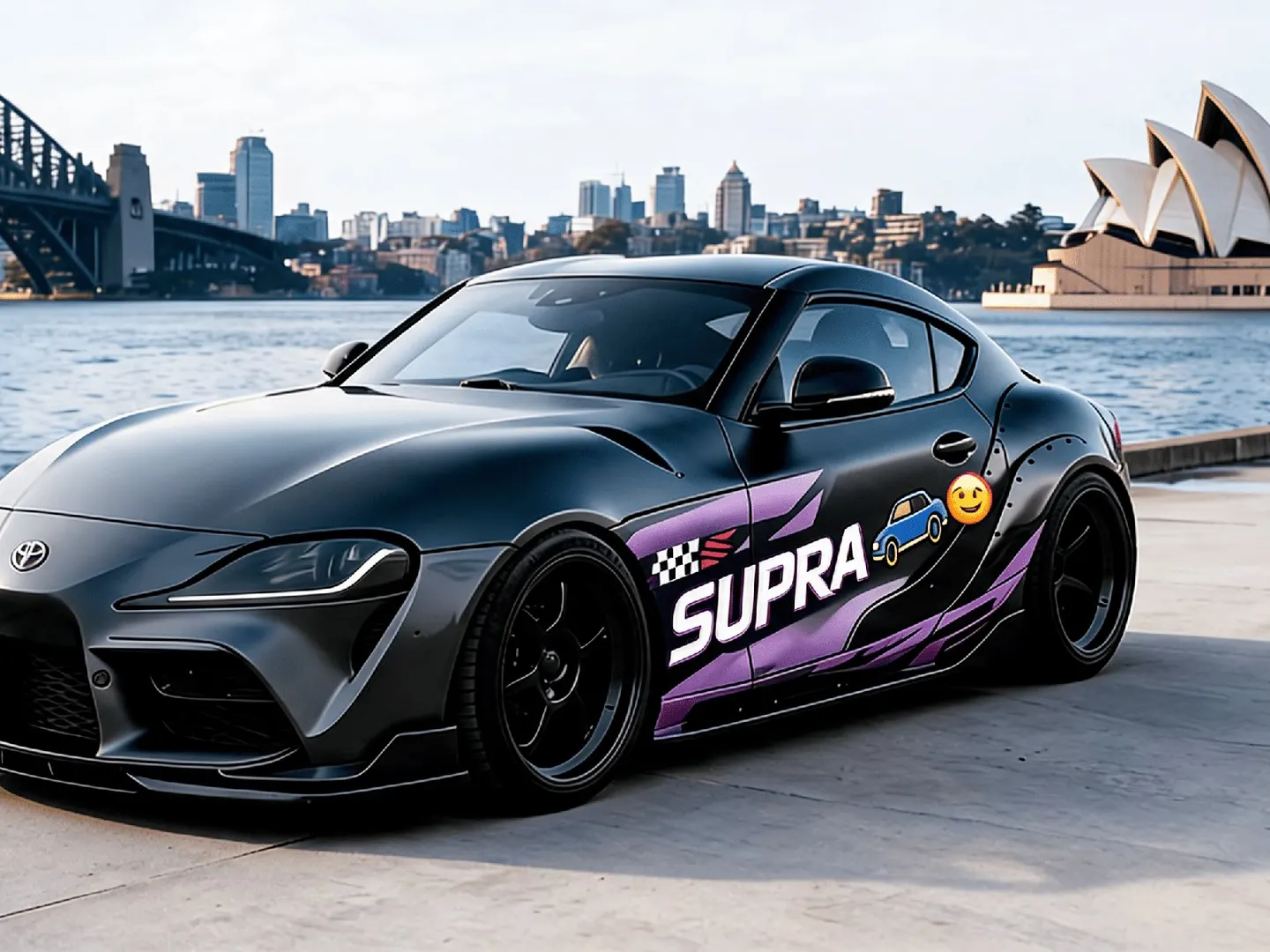
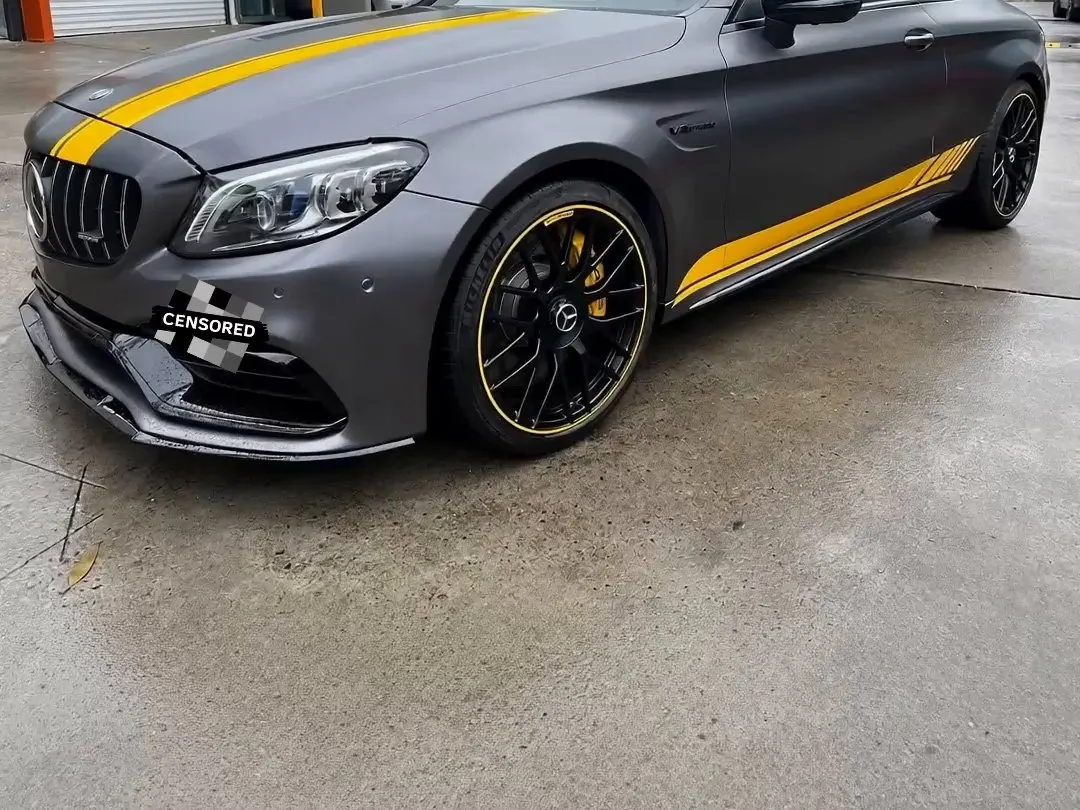
The big reason people wrap is choice. Satin, matte, colour-shift, brushed and carbon textures are all off-the-roll products. Getting the same look in paint takes special materials and a painter who sprays them well. A wrap also takes printed graphics, which is why it's the usual way to brand a business vehicle.
What a wrap won't do
A wrap is a skin, not a repair. It follows every dent, chip and ripple under it, and dust or rust spots show as bumps. Peeling clear coat is worse: the film can pull loose paint off when it's removed. Fix the paint first.
Watch out for coatings, too. Gtechniq, a coating maker, warns that PPF and vinyl won't stick to paint that already has its EXO coating on it.[3] If your car is ceramic coated, tell your installer before you book, because the coating may need to come off first.
What a respray involves
A proper respray is mostly preparation. The painter removes trim, sands the old finish, repairs dents and rust, and builds the surface back up with primer. Then come the colour coats, the clear coat, curing, and a final cut and polish to take out dust and texture.
How much of that work gets done is what separates a cheap respray from a great one. PPG, a paint maker, documents a show-quality refinish where four coats of clear were applied and baked for one hour.[4] On that car, sanding the clear from 800 to 5,000 grit alone took over 140 hours.[4] Most resprays aren't show cars, but the example shows where the time and money go.
Why paint still wins on depth and permanence
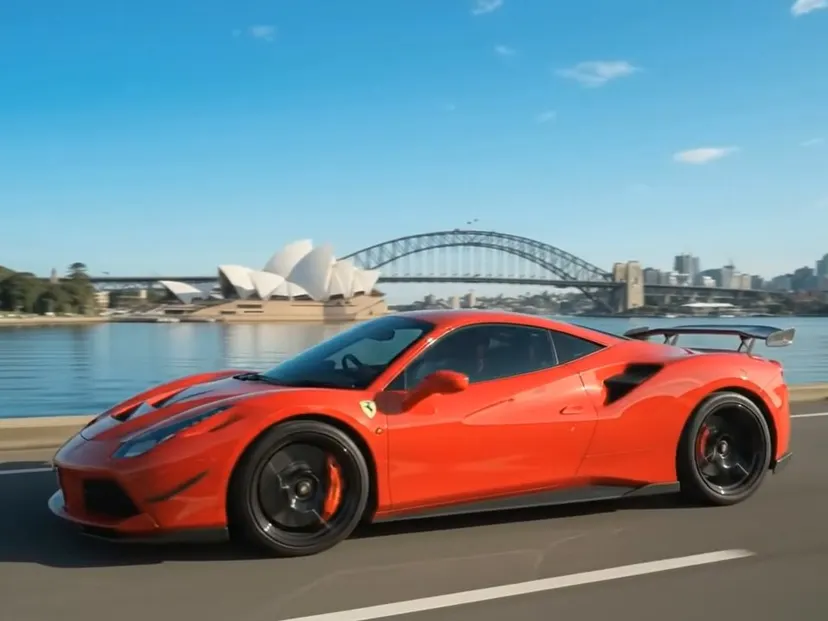
Avery Dennison, which makes wrap film, says paint offers deeper gloss while wraps give wider visual customisation.[1] It also says premium paint systems can last decades, which no wrap claims.[1] If you're restoring a classic or fixing a tired, faded car you plan to keep, paint is the answer.
The catch: a respray can't be undone
Once the factory finish is sanded off, it's gone. A buyer with a paint gauge can usually tell, too. DeFelsko, which makes paint thickness gauges, says factory paint typically measures between 100 and 180 microns.[5] It adds that unusually high readings are often a sign the panel has been repainted.[5]
How long a car wrap lasts compared with paint
5–7 years
How long quality wraps commonly last, according to film maker Avery Dennison[1]
That's a general figure. Data sheets go further, and they rate each film by colour and by which way the surface faces. Here is what Avery Dennison publishes for its Supreme Wrapping Film in the Asia Pacific region.
| Film colour | Vertical surfaces (doors, guards) | Horizontal surfaces (bonnet, roof, boot) |
|---|---|---|
| Black and white | 12 years | 3 years |
| Colours | 10 years | 2 years |
| Metallic | 5 years | 2 years |
These ratings come from Avery Dennison's product data sheet.[2] Notice the gap between vertical and horizontal surfaces. A bonnet, roof and boot lid face the sky all day, so they take far more sun and heat than the doors.
The data sheet also says its durability is based on European and central North American conditions.[2] It warns that performance drops in places with long high-temperature exposure, such as northern Australia.[2] Sydney isn't the tropics, but our sun is strong. Cancer Council Australia says Australia has some of the highest levels of UV radiation in the world, and UV is present every day of the year.[6]
So plan on the roof and bonnet showing age first. Parking in a garage or under cover is the single biggest thing you can do to stretch a wrap's life. Avery Dennison's care bulletin says to park in shade or under cover whenever possible.[7]
Does a car wrap damage your paint?
Not when quality film goes on sound factory paint and comes off properly. Avery Dennison rates its Supreme Wrapping Film as removable for up to 10 years from smooth factory (OEM) painted surfaces.[2] It also says a wrap shields the clear coat underneath from UV, minor abrasions and chemical contaminants.[1]
There are limits. The same data sheet says the film is not removable from nitrocellulose paints and some plastics.[2] The removability rating is for smooth factory paint, so it doesn't promise anything for a panel that's been resprayed or touched up. Tell your installer about any repairs, and expect them to check those panels closely.
Do you need to tell Service NSW if you wrap your car?
Colour is part of your registration record in NSW. Service NSW lists colour among the basic vehicle details you change at a service centre, using its Change of Records form.[8] Its page also says you may not need an inspection report if you're only changing your vehicle's colour.[8]
What the page doesn't spell out is whether a removable wrap counts as a colour change. CarExpert says NSW owners need to complete a Change of Records form after a colour change, and may need the car assessed.[9] It also notes that rules differ between states: Victoria, for example, asks for notification only for painted changes, not wraps.[9]
Our advice is simple. If a wrap changes your car's main colour, call or visit Service NSW before you book it and ask what they need. Registration records help police and emergency services identify a car, and CarExpert says police may pull you over if the colour doesn't match.[9]
Tell your insurer, too. A colour change affects how your car is described on the policy, and some insurers treat a wrap as a modification. Ask them how they want it recorded, and keep the installer's invoice. If you're also tinting the windows, our guide to NSW window tint laws covers the shade limits.
How a quality wrap goes on
Knowing the process helps you judge a quote. These are the stages any careful installer works through, and the questions worth asking at each one.
Inspect the paint
Every panel is checked for chips, dents, repairs and lifting clear coat. Problems are fixed or flagged before any film goes on, because a wrap shows whatever is underneath it.
Wash, decontaminate and degrease
The car is washed and the paint cleaned of wax, tar and bonded grime so the adhesive can grip. Any coating that stops vinyl sticking needs to come off first.[3]
Remove hardware where it's needed
Badges, handles, mirrors or lights may come off so the film can wrap round the edges. This takes longer, but it hides the paint underneath and stops edges lifting.
Lay and shape the film
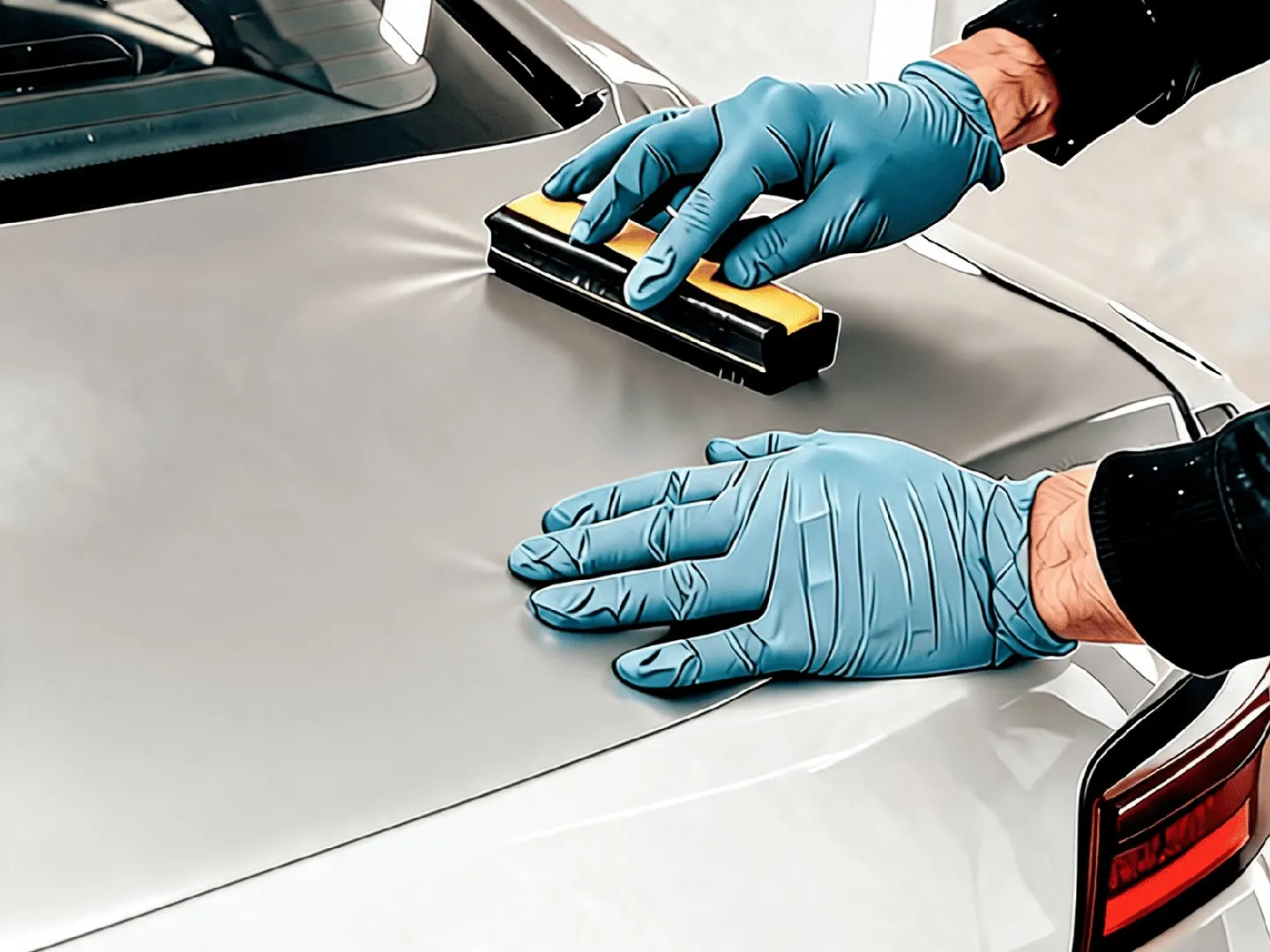
Film is laid dry, positioned, then squeegeed down and stretched around curves with heat.[2] Seams are planned so they fall in panel gaps or out of sight.
Post-heat and trim the edges
Stretched areas and edges are heated again so the film relaxes and holds its shape. Edges are trimmed and tucked so they don't catch the wind or a wash mitt.
Leave it to settle
Avery Dennison says not to wash a new wrap within the first 48 hours.[7] After that, it recommends cleaning at least once a month.
Looking after a wrap vs looking after paint
Paint is forgiving. You can machine polish out a scratch, wax it and put a ceramic coating on it. Vinyl needs a gentler routine, and the wrong product can dull it or lift an edge. Avery Dennison's own care rules for its wraps are clear:
Hand wash. Use a car wash made for vehicles with a pH between 5 and 9, and no waxes, polishes or harsh solvents.[7]
Skip brush car washes. Avery Dennison says brushes can damage the wrap or cause the edges to lift.[10] If you must use an automatic wash, choose a brushless one.[7]
Go easy with a pressure washer. Keep the nozzle at least 30 cm from the film, use a wide spray and stay under 1200 psi.[7] Aim straight at the surface, never at an edge.
No wax, polish or cutting compound. Avery Dennison says not to use any form of wax or products with petroleum distillates.[10] Polishes and cutting agents abrade and scratch the film.[7]
Spot-clean droppings, sap and bugs straight away. They can stain and damage the film if left.[7]
Matte film needs matte products. Avery Dennison notes matte films can streak with some care products, so test anything new on a hidden spot.[7]
Can you ceramic coat a wrap? Yes, with the right product. Gtechniq says its Crystal Serum Ultra can go on vinyl, wraps and matte finishes, though it recommends a different two-coat system for them.[3] Ask about it when you book. Our guide on how long ceramic coating lasts explains what a coating does and doesn't do.
Resale value: wrap or paint?
Many buyers want a factory colour with original paint. A wrap lets you enjoy a different colour now and sell the car in its original finish later. Avery Dennison says protected original paint may support resale value, as long as the wrap is removed properly.[1]
A respray in a new colour is a permanent change to the car's history. It's worth it on a restoration or a car with failing paint. On a near-new car with healthy paint, it can narrow the pool of buyers. Keep every invoice either way, because a buyer will ask.
Wraps for business vehicles and signage
Wraps suit vans, utes and fleet cars well. Printed graphics, logos and phone numbers go on and come off without touching the paint, so the vehicle can be re-branded or sold later. CarExpert notes that wraps are often treated as temporary signage, which makes them practical for businesses.[9]
For registration, CarExpert says business vehicles with signage should list their predominant colour, usually the colour under the bonnet, in the door jambs or under the interior trim.[9] Our automotive signage service covers part wraps, decals and lettering as well as full wraps.
Wrap or paint: which should you choose?
For a new or near-new car
Wrap it. The factory paint is at its best, and a wrap keeps it that way while you enjoy a different colour. When you sell, the original finish comes back. If the car is coated, sort that out before the wrap goes on.
For an older car with faded or peeling paint
Paint it. A wrap needs a sound surface, and peeling clear coat can come away with the film later. Fix the paint properly, then decide whether you want to protect it with film or a coating.
For a car with chips, dents or rust
Repair the body first, whichever way you go. A wrap won't hide damage, and rust under film keeps spreading. Once the panels are fixed, a wrap or a respray will both look right.
For a leased car, a work vehicle or a short-term look
Wrap it. You can return a leased car or sell a work ute in its original colour, and change the look again whenever you like. Signage goes on and off the same way.
For a classic restoration
Paint it. A restoration usually means stripping, repairing and refinishing to the original colour. That's paint work, and it's built to last decades.[1]
Our service
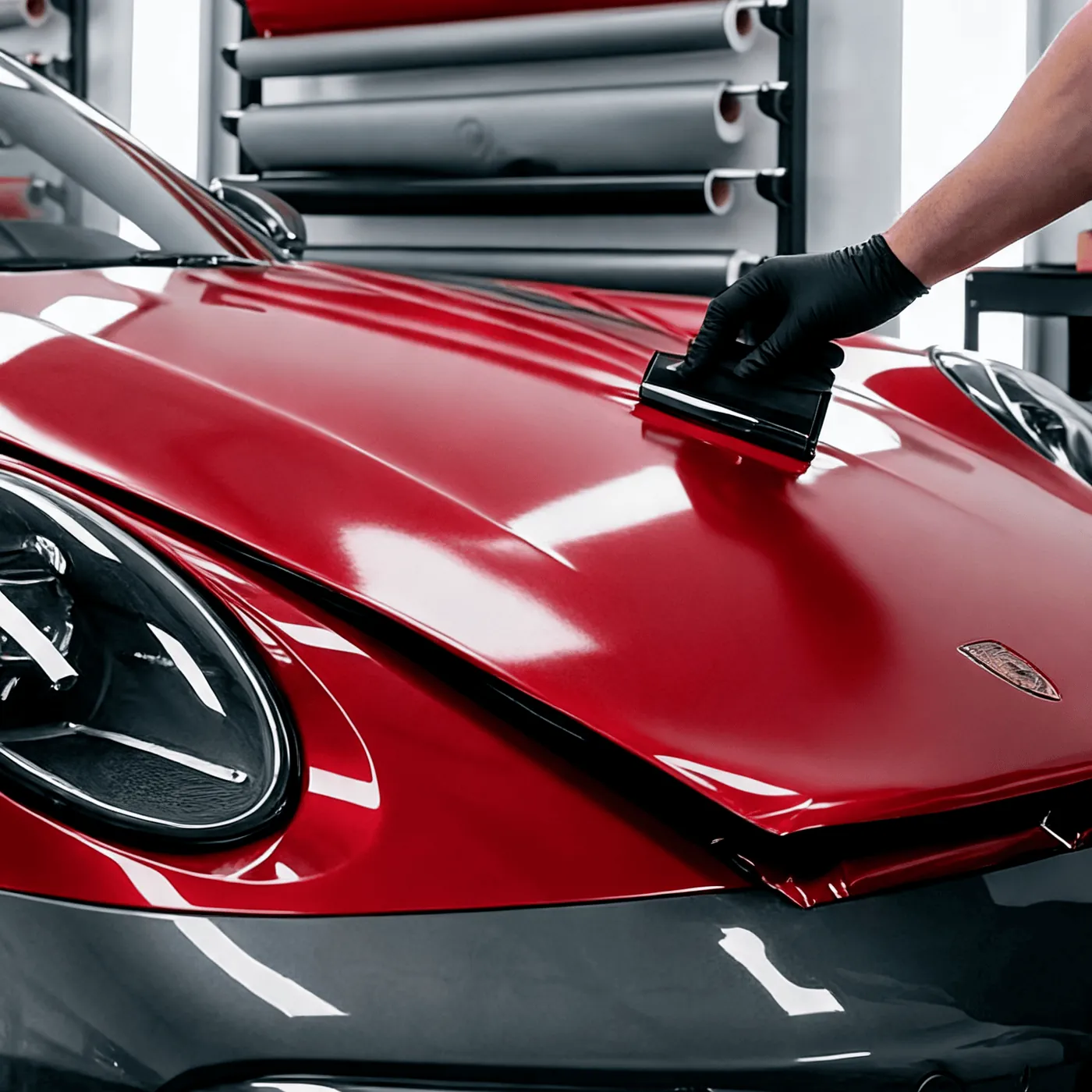
Car wrapping covers your factory paint with cast vinyl film in a new colour or finish. We wrap whole cars, roofs, bonnets, mirrors and trim in gloss, satin, matte, colour-shift and carbon look, in clean indoor bays at Revesby and Condell Park, with a written quote before we start.
Our service
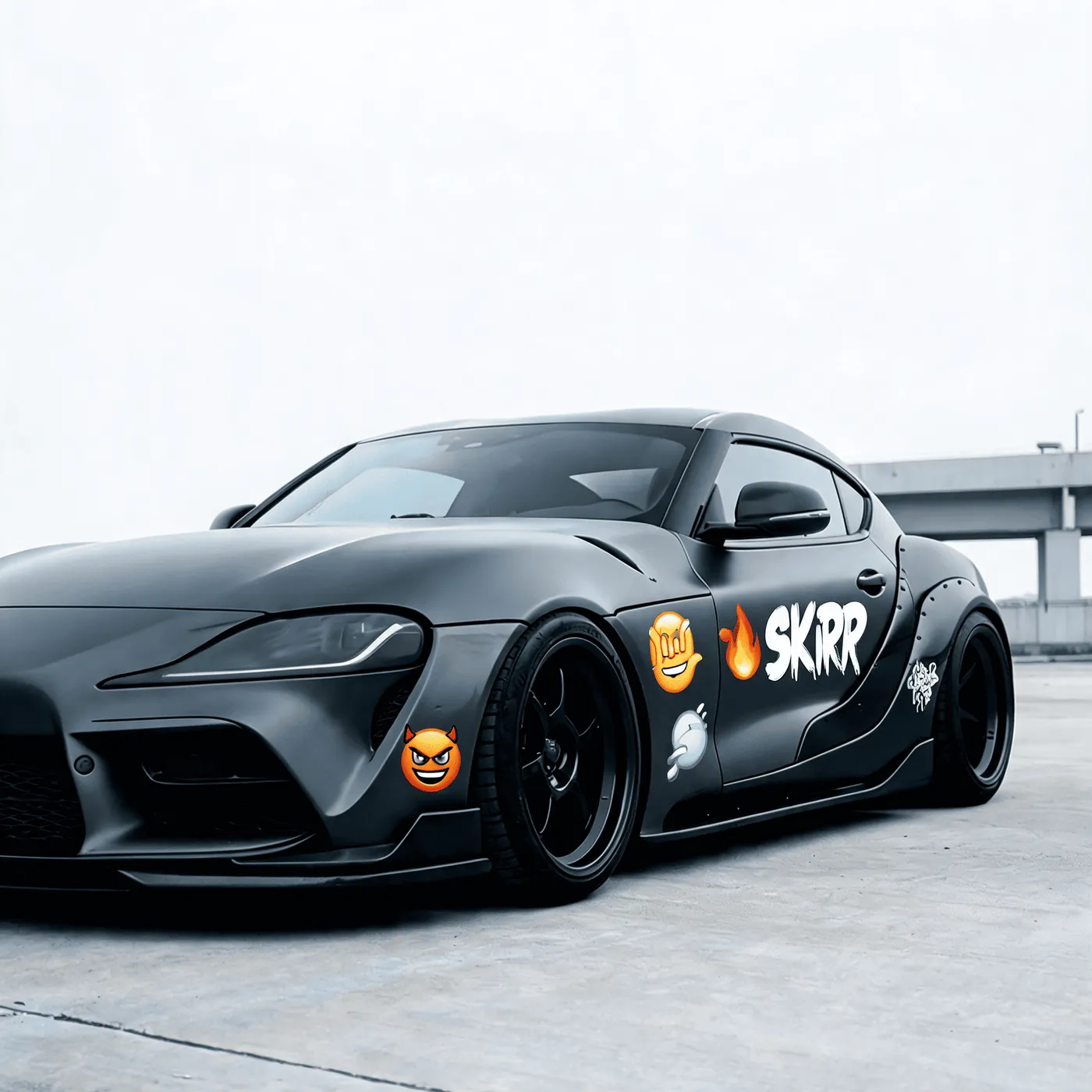
Vehicle signage puts your business name, number and brand on your vans, utes and cars. We design it, send a proof, then print or cut it and fit it indoors at Revesby and Condell Park, from simple lettering on one ute to matching graphics across a whole fleet.
What decides the cost of a wrap or a respray
We don't publish prices, because every car and every finish is different. These are the things that set the quote for a wrap:
The size and shape of the car. Deep bumpers, vents and sharp creases take more film and more time.
How much you cover. A roof, a bonnet, a part wrap or the whole car.
The film. Gloss colours, matte, satin, colour-shift, chrome-look and printed films all differ.
Door jambs and hardware. Wrapping the jambs, and removing handles, badges and lights, adds labour.
Paint condition. Chips, dents or a coating to remove add a stage before the film goes on.
For a respray, the biggest factors are bodywork, how much is stripped and how many coats go on. Send us the make, model and year, and what you have in mind, through our quote request page. We'll come back with a written quote.
Car wrap and paint questions
Is it cheaper to wrap or paint a car?
A quality wrap usually costs less than a premium respray of the same car, mainly because a respray takes far more preparation and labour.[1] A cheap respray can cost less than a good wrap, but it won't look or last like a good one. Compare quality with quality.
How long does a car wrap last in Australia?
Avery Dennison says quality wraps commonly last 5 to 7 years.[1] Horizontal panels like the roof and bonnet age fastest, and its data sheet says performance drops in hot, sunny climates.[2] Parking under cover and hand washing help a wrap reach the top of its range.
Does wrapping a car damage the paint?
Not when good film goes on sound factory paint and is removed properly. Avery Dennison rates its premium wrap film as removable from smooth factory paint for up to 10 years.[2] Resprayed panels, peeling clear coat and old, brittle film are where problems start.
Do I need to tell Service NSW if I wrap my car?
Colour is a registration detail in NSW, changed with a Change of Records form at a service centre.[8] Service NSW doesn't say on that page whether a removable wrap counts. If a wrap changes the main colour, ask Service NSW before you book it.
Can you wrap a car with chipped or peeling paint?
You can wrap over small, smooth chips, but they'll show as dents in the film. Peeling or flaking clear coat should be fixed first, because the wrap can pull loose paint off when it comes off. A good installer will tell you which panels need work.
Are chrome wraps legal in NSW?
Film on bodywork is allowed without certification as long as it doesn't reflect excessive light.[9] CarExpert says highly reflective chrome wraps can dazzle other drivers and are a fineable offence in most jurisdictions. Choose a satin or brushed metallic look instead of a mirror finish.
Can you put a ceramic coating on a wrap?
Yes, if the coating is made for vinyl. Gtechniq says its coatings can be used on wraps and matte finishes, and recommends specific products for them.[3] Don't coat paint before wrapping it, because vinyl may not stick to coated paint.
Want to see wrap film up close before you decide? Visit our Revesby workshop or our Condell Park workshop, bring the car, and we'll check the paint and talk you through the finishes.
Sources
- [1]Avery Dennison Graphics Solutions (Asia Pacific). Car Wrap vs Paint: Which Is Better for Long-Term Aesthetics, Durability & Value?, 2026-05. ↑
- [2]Avery Dennison (Asia Pacific). Avery Dennison Supreme Wrapping Film product data sheet, 2013-11. ↑
- [3]Gtechniq Australia. Gtechniq Australia FAQs, 2026. ↑
- [4]PPG Refinish. Show-Quality Finish - Jamie Cooper, 2026. ↑
- [5]DeFelsko Corporation. How to Use Paint Thickness Gauges for Better Automotive Detailing, 2025. ↑
- [6]Cancer Council Australia. UV Index, 2026. ↑
- [7]Avery Dennison Graphics Solutions (Asia Pacific). Instructional Bulletin 1.8: Vehicle Wrap and Graphics Maintenance (Revision 2), 2022-02. ↑
- [8]Service NSW. Change the details of your vehicle, 2026-03. ↑
- [9]CarExpert. Is it illegal to change the colour of your car?, 2024-05. ↑
- [10]Avery Dennison Graphics Solutions (Asia Pacific). How to keep your car wrap pristine, 2026. ↑
About the author
Founder, Tinting Xperts
Mohammad Habboushi founded Tinting Xperts in 2016 with one bay, one squeegee and a rule the team still works to: if it isn't right, it doesn't leave. The business has grown to two workshops, at Revesby and Condell Park, and a team of more than 30 fitters, and Mohammad still fits cars on the floor most days.


