
Guide · Ceramic & Graphene Coatings
How long does ceramic coating last? Real lifespans, and how to make yours go the distance
What the coating makers actually promise, what wears a coating out on a Sydney car, and the simple routine that keeps it working for years.
Written and reviewed by Mohammad Habboushi, Founder of Tinting Xperts
· 12 min read

Key takeaways
- Most professional ceramic coatings are rated by their makers for roughly two to five years, and some guarantees run longer if you keep up annual servicing.
- Brush car washes, harsh chemicals and contamination left to bake in the sun wear a coating out fastest.
- Water that sheets instead of beading can mean the coating is clogged, not gone, so decontaminate it before you judge it.
- A ceramic coating doesn't stop stone chips or deep scratches; paint protection film does that job.
- Prep decides how well a coating bonds, so paint correction before coating is part of how long it lasts.
How long does ceramic coating last? A professionally applied ceramic coating is usually rated by its maker for somewhere between two and five years on a daily-driven car.[1][2] Some systems carry longer guarantees, but only if you keep up the washing and annual servicing they ask for.
Those numbers are best-case figures. How long your coating really lasts depends on three things: the product, the prep under it and how the car is washed and parked. This guide covers all three, so you know what to expect from a ceramic coating before you book one, and how to keep it working afterwards.
How long does ceramic coating last, by product tier?
"Ceramic coating" covers everything from a spray you wipe on at home to a multi-layer system only trained installers can buy. The tiers last very different lengths of time. Here is what four of the best-known makers publish for their own products.
| Product (maker) | What it is | Maker's stated durability |
|---|---|---|
| Q² CanCoat EVO (GYEON) | Spray-on coating | Up to 12 months or 12,000 km[3] |
| Q² One EVO (GYEON) | Entry-level wipe-on coating | Up to 24 months or 25,000 km[1] |
| Q² Mohs EVO (GYEON) | Enthusiast and professional coating | Up to 36 months or 40,000 km for one layer; up to 48 months or 50,000 km for two layers[4] |
| Ecocoat Kenzo (IGL Coatings) | Professional-only, graphene-reinforced | Up to 5 years of protection[2] |
| Crystal Serum Ultra (Gtechniq) | Accredited-detailer-only coating | A nine-year guarantee[5] |
| Ceramic Pro Paint Protection (Ceramic Pro Australia) | Professional coating system | Warranted for the life of ownership with annual services; 5 years from the last service if one is missed[6] |
Notice the words up to. GYEON labels its figures "Real World Lifespan", but each one is still a ceiling, not an average.[4] Kilometres matter as much as months, because every wash and every trip adds wear.
Up to 36 months
GYEON's stated real-world lifespan for one layer of Q² Mohs EVO; a second layer takes the figure to 48 months[4]
A guarantee is also not the same as a lifespan. Ceramic Pro Australia's lifetime cover depends on an annual service by an approved applicator, and it excludes swirl marks, scratches, chips and water spots.[6] So a long warranty tells you the coating is built to last, not that it will look perfect with no effort from you.
What shortens a ceramic coating's life
Coatings rarely fail all at once. They wear away a little with every wash, every hot day and every bird dropping. These are the habits that use up a coating's life fastest.
Automatic brush car washes
Spinning brushes drag grit across the paint. Ceramic Pro Australia warns that rotating brushes can cause heavy scratching and abrasion on a coated finish.[7] Its warranty also excludes damage from automatic car washes, brushes and contaminated wash tools.[6] At a self-serve bay, use the high-pressure soap and rinse, but never the shared brush.
Harsh chemicals and the wrong shampoo
Strong alkaline or acidic cleaners wear coatings down faster. Ceramic Pro tells owners to avoid shampoos with wax or petroleum distillates, and anything with a pH under 5.0 or over 9.0.[8] Gtechniq gives similar advice: skip shampoos with added polymers or gloss enhancers, because they can interfere with how the coating performs.[9]
Neglect: contamination left to bake on
A coating makes dirt easier to remove, but it doesn't make dirt disappear. Ceramic Pro says bird droppings, bug splatter, sap and tar can bond to the coating when left in direct sun and heat.[8] Wash it off within a day or two, not at the end of the month.
Sydney sun, trees and outdoor parking
Australia has some of the highest levels of UV radiation in the world.[10] A car parked outside all day in Sydney is asking its coating to work hard every single day. Parking under trees adds sap, leaves and branches, which Ceramic Pro says can etch and scratch a coating.[8] A garage or carport won't double a coating's life on its own, but it takes a lot of load off.
Poor prep before the coating went on
A coating bonds to whatever surface it is given. If the paint wasn't properly cleaned, decontaminated and degreased first, the bond is weaker from day one. We cover prep in its own section below, because it decides so much of the outcome.
Signs your ceramic coating is wearing off
A healthy coating is easy to read. Water forms tight, round beads and rolls off the panel. The paint feels slick under a clean microfibre, and dirt rinses away with little effort. As the coating wears, those behaviours fade.
Beading turns to sheeting. Water sits in flat patches or large, lazy puddles instead of tight beads.
The surface feels grabby. A clean microfibre drags instead of gliding.
Dirt clings. The car looks dirty sooner, and a rinse no longer lifts road film.
Water spots appear more often. Minerals from rain or tap water stick where they used to roll off.
Gloss looks flatter on the bonnet, roof and boot lid, the panels that take the most sun.
Before you decide the coating is finished, rule out contamination. GYEON explains that contamination builds up on coatings over time and limits their water behaviour.[11] A decontamination wash often brings the beading straight back. If water still sheets after that, the coating on that panel is likely worn through, and it's time to talk about a top-up or recoat.
How to make a ceramic coating last longer: the maintenance routine
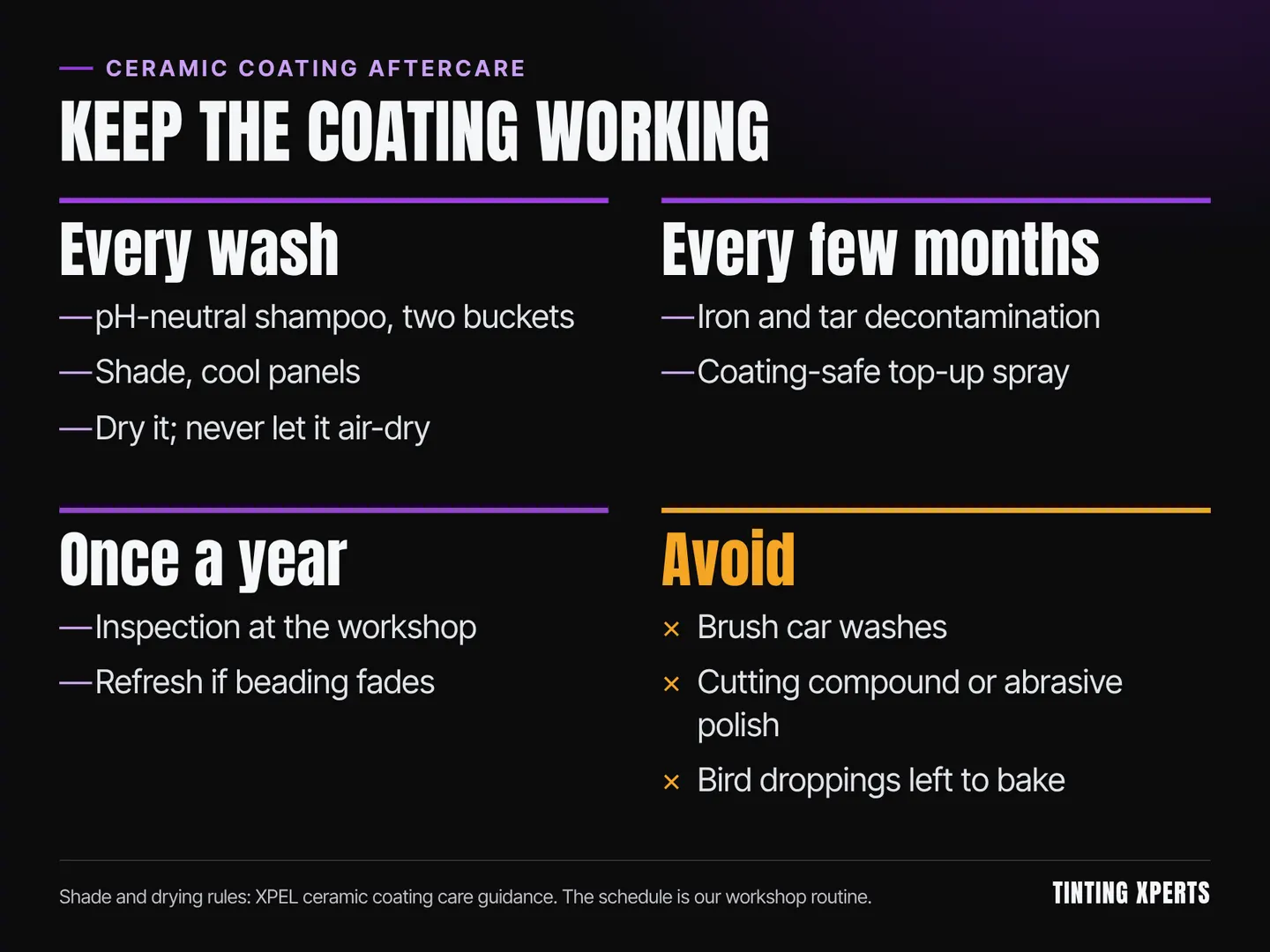
Maintenance is where most of a coating's real-world life is won or lost. None of it is complicated. It just needs the right tools and a regular habit. This is the routine the coating makers themselves recommend, put in order.
Rinse or pre-wash before you touch the paint
Hose or pressure-rinse the whole car to lift loose dirt first.[7] A snow foam pre-wash softens road film so your mitt has less grit to drag around.
Wash the wheels with separate tools
Brake dust is gritty and full of metal particles. Ceramic Pro tells owners to use a dedicated mitt and bucket for wheels and never reuse them on the paint.[8]
Two-bucket hand wash with a pH-neutral shampoo
Use one bucket of shampoo and one of clean rinse water, ideally with a grit guard. Work top to bottom, one panel at a time, rinsing the mitt often.[8] Choose a pH-neutral shampoo with no wax or gloss additives.[7]
Dry straight away, in the shade
Never let tap water air-dry on the paint, because the minerals leave spots.[7] Use a soft, clean microfibre drying towel or a blower, and avoid chamois on coated paint.
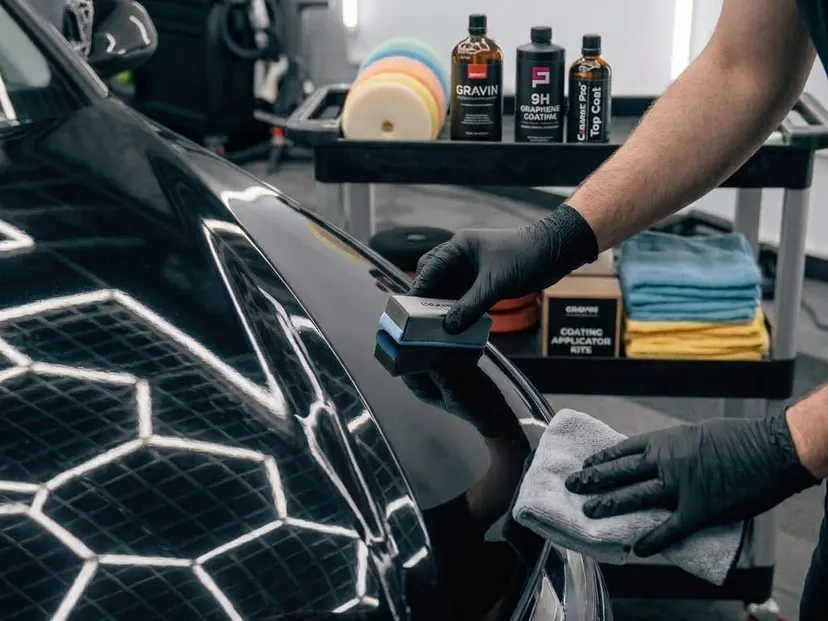
Top up with a maintenance spray
A silica-based maintenance spray refreshes the slickness and water behaviour of the coating. GYEON says regular use of its Cure spray can significantly extend the durability of water repellency.[12] Use the topper your installer recommends for your coating.
Decontaminate when beading drops
Every few months, or when water behaviour fades, use a coating-safe decontamination shampoo or iron remover. GYEON's RestartWash is designed to remove the road film and embedded contamination that regular shampoos leave behind.[11]
Book the annual inspection
Many warranties need it. Ceramic Pro Australia's annual service covers an exterior wash, decontamination and inspection by an approved applicator.[6]
How often should you wash a coated car?
Ceramic Pro Australia recommends washing about once a fortnight, more often if the car sees heavy use, coastal air, insects, sap or bird droppings.[7] Its US aftercare guide adds a proper two-bucket hand wash at least every 60 days if you mostly use a foam cannon or touchless wash.[8] Washing more often than that doesn't hurt, as long as the technique is gentle.
GYEON's own channel shows a full maintenance wash on a coated car, from pre-wash to drying. Watch it before your first wash at home.

Can you wax over a ceramic coating?
You don't need to, and most makers say not to. Ceramic Pro's aftercare tells owners not to use wax or paint sealant after washing, and to avoid shampoos that contain wax.[8] Wax sits on top of the coating and changes how water behaves. Use the maintenance spray made for your coating instead.
What a ceramic coating doesn't do
A ceramic coating is a thin, hard, slick layer. It protects against chemical etching, makes washing easier and keeps gloss up. It is not armour. Ceramic Pro says the name "9H" refers to the coating's hardness positioning and does not mean paint becomes scratch-proof or immune to damage.[13]
Stone chips: a coating is far too thin to absorb a stone hitting the bonnet at highway speed.
Deep scratches and scuffs: keys, trolleys and branches go straight through it.
Swirl marks from bad washing: a coating resists light marring better, but a dirty mitt still leaves marks.
Water spots, if you let water dry on it: minerals can still etch a coated surface.
That's why Ceramic Pro Australia's warranty lists swirls, scratches, chips and water spots as exclusions.[6] If stone chips are your main worry, you need paint protection film, a thick, self-healing urethane film. Our guide to PPF vs ceramic coating explains how the two work together, and whether paint protection film is worth it for your car.
Why prep and paint correction decide how long it lasts
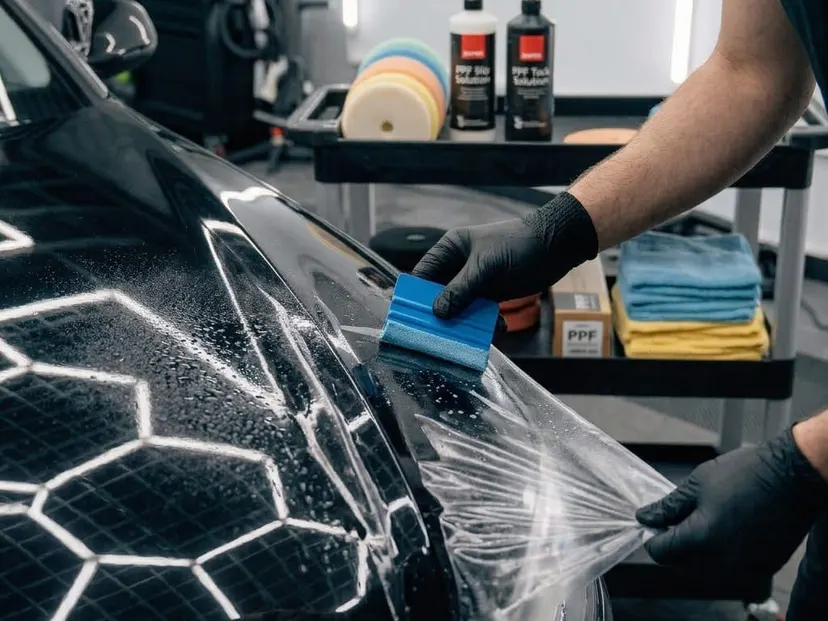
A coating is only as good as the surface under it. XPEL notes that without paint correction, blemishes and scratches are sealed under the coating and highlighted afterwards.[14] Prep also affects the bond, and the bond affects how long the coating holds on.
A proper prep usually runs in this order:
Wash the car thoroughly to remove loose dirt.
Decontaminate with an iron remover, tar remover and clay to pull out bonded grit.
Inspect and measure the paint under strong light, and check its thickness with a paint gauge.
Correct the paint by machine polishing to remove swirls and light defects, where needed.
Degrease with a panel wipe to remove polishing oils so the coating can bond to bare clear coat.
Apply and cure the coating in a clean, controlled space.
Ceramic Pro describes the same flow for its 9H coating: review the paint, then wash, decontaminate and correct it where required, before any coating goes on.[13] Application skill matters too. Gtechniq warns that if Crystal Serum Ultra is applied incorrectly, the car would need flat sanding to remove it.[5] Read our guide to what paint correction is to see what happens at the polishing stage, or book paint correction with your coating.
Curing: the first few days matter
A fresh coating is still hardening for some time after it goes on. Ceramic Pro Australia's guidance is to keep the car dry for at least eight hours and avoid washing with chemicals for three days.[7] Ceramic Pro's US guide puts full cure at two to three weeks, depending on humidity and temperature.[8] Follow your installer's own handover instructions, because they're written for the product on your car.
Warranties, inspections and what they really cover
Coating warranties are useful, but they come with conditions. Read them before you pay, not after something goes wrong. Ceramic Pro Australia's published terms are a good example of what to look for.[6]
Eligibility: passenger vehicles within five years of manufacture, with a factory clear-coated finish.
Servicing: an annual service by an approved applicator, within 30 days either side of the anniversary, to keep lifetime cover.[6]
Care: the paint must be washed regularly to the maker's recommendations, roughly fortnightly to monthly.
Paperwork: you need the tax invoice showing the car, the product and the application date.
Exclusions: swirls, scratches, chips, water spots, failed clear coat, and damage from automatic washes or brushes.
Those figures come from Ceramic Pro Australia's own terms.[6] In practice, a warranty mostly covers the coating failing against environmental fallout like bird droppings, if you've kept your side of the deal. It rarely covers how the paint looks after poor washing.
Is a ceramic coating worth it for a Sydney car?
For most daily drivers, yes, if you go in with the right expectations. A good coating makes the car much easier to wash, keeps it glossier for longer and protects the clear coat from chemical etching. It will not stop chips or excuse a brush car wash.
It's worth it most when you plan to keep the car for several years, when the paint has just been corrected or is new, and when you're happy to hand-wash it regularly. If you want a coating with a different chemistry, our guide to graphene vs ceramic coating compares the two honestly.
Our service
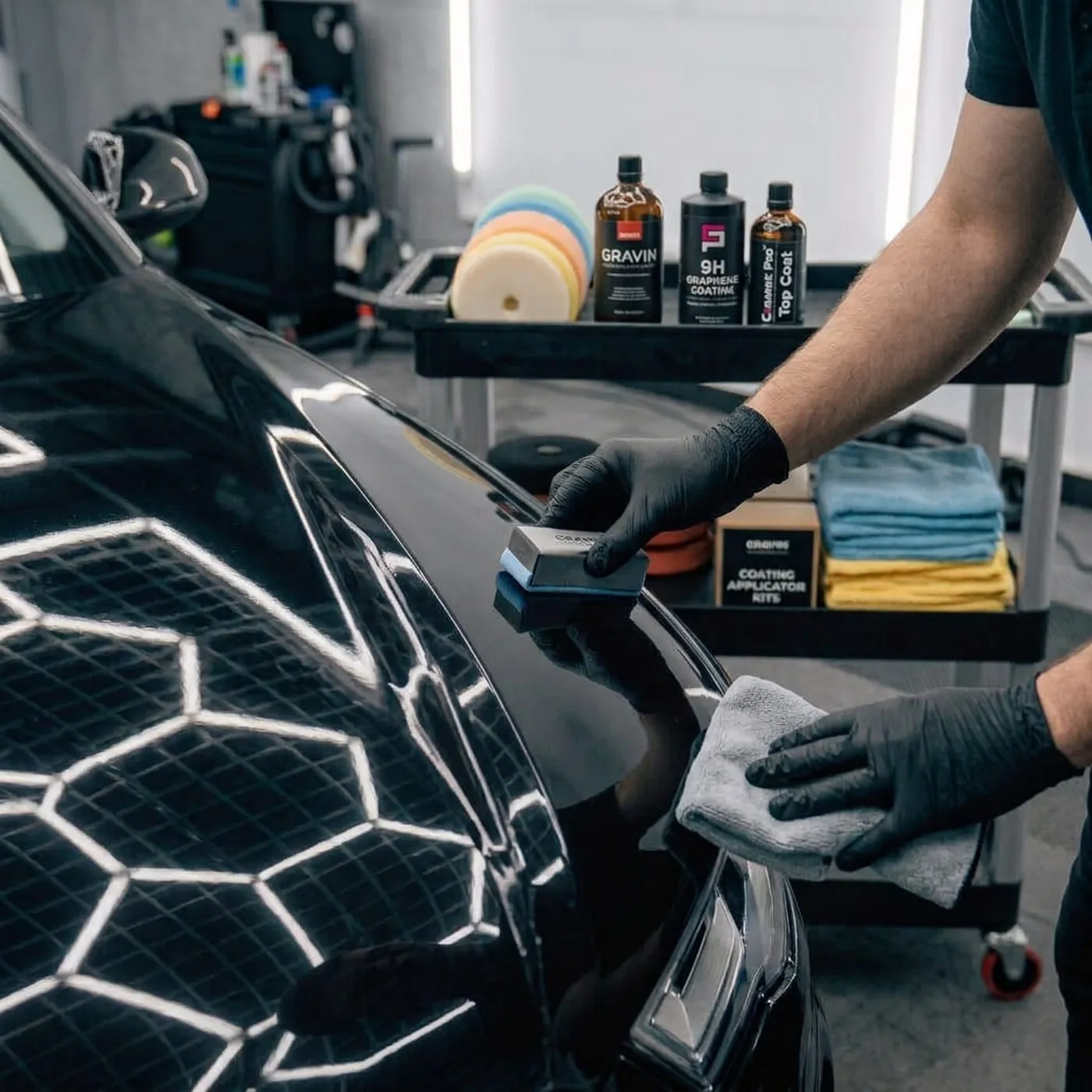
A ceramic coating is a liquid layer that bonds to your clear coat and cures hard, slick and glossy. Water beads off, grime lets go and washing gets quicker. We decontaminate and correct the paint first, then coat it by hand in a clean indoor bay at Revesby or Condell Park.
Cost depends on the product tier, how many layers go on, the size of the car and how much paint correction it needs first. Send us the make and model and a few photos for a written quote. You can also drop into our Revesby workshop or our Condell Park workshop so we can inspect the paint in person.
Frequently asked questions
How long does ceramic coating last on a daily driver?
Professional coatings are generally rated for about two to five years, and some guarantees run longer with annual servicing.[4][2] Spray-on coatings are rated much shorter, often around a year.[3] Real-world life depends on prep, washing habits and how much time the car spends outside.
Can I take a ceramic-coated car through an automatic car wash?
Avoid brush-style automatic washes. Ceramic Pro Australia says the brushes can cause heavy scratching and abrasion, and its warranty excludes that damage.[6] A touchless wash is a reasonable backup, but dry the car fully before you drive off.
How do I know if my ceramic coating is still working?
Watch the water. Tight beads that roll off mean it's working; flat sheets and grabby paint mean it's clogged or worn. Do a decontamination wash first, because built-up contamination limits a coating's water behaviour.[11] If it still sheets afterwards, that panel likely needs a top-up.
Does ceramic coating need to be reapplied?
Eventually, yes. Every coating wears down, and the makers' figures are ceilings, not guarantees of performance. A maintenance spray between washes slows the wear, and many owners have the top surfaces re-coated when beading fades there first.
Does ceramic coating stop stone chips and scratches?
No. A coating is thin and hard, and it resists light marring and chemicals, but stones and keys go straight through it. Ceramic Pro says its 9H rating does not make paint scratch-proof.[13] For chip protection, choose paint protection film.
How soon can I wash my car after ceramic coating?
Follow your installer's handover first. Ceramic Pro Australia's guidance is no water for at least eight hours and no chemical wash for three days.[7] Gentle rinsing is fine after that, but the coating keeps hardening for some time.
Do I need paint correction before ceramic coating?
Usually, even on new cars. A coating seals in whatever is underneath it, so swirls and scratches stay visible and can look worse.[14] Most installers do at least a light machine polish before coating.
Sources
- [1]GYEON. Q² One EVO, 2026. ↑
- [2]IGL Coatings. Ecocoat Kenzo Graphene Reinforced, 2026. ↑
- [3]GYEON. Q² CanCoat EVO, 2026-05. ↑
- [4]GYEON. Q² Mohs EVO, 2026-06. ↑
- [5]Gtechniq Australia. Crystal Serum Ultra, 2020-08. ↑
- [6]Ceramic Pro Australia. Ceramic Pro Warranty Terms, 2026. ↑
- [7]Ceramic Pro Australia. Ceramic Pro Aftercare & Maintenance, 2026. ↑
- [8]Ceramic Pro. Ceramic Pro Coatings - Aftercare, 2026. ↑
- [9]Gtechniq. Maintaining your Gtechniq ceramic coating, 2026. ↑
- [10]Cancer Council Australia. UV Index, 2026. ↑
- [11]GYEON. Q²M RestartWash, 2026-06. ↑
- [12]GYEON. Q²M Cure REDEFINED, 2026-05. ↑
- [13]Ceramic Pro Australia. Ceramic Pro 9H Ceramic Coating, 2026. ↑
- [14]XPEL. Paint Correction 101: Understanding the Process & Ceramic Coating, 2023-08. ↑
About the author
Founder, Tinting Xperts
Mohammad Habboushi founded Tinting Xperts in 2016 with one bay, one squeegee and a rule the team still works to: if it isn't right, it doesn't leave. The business has grown to two workshops, at Revesby and Condell Park, and a team of more than 30 fitters, and Mohammad still fits cars on the floor most days.

